
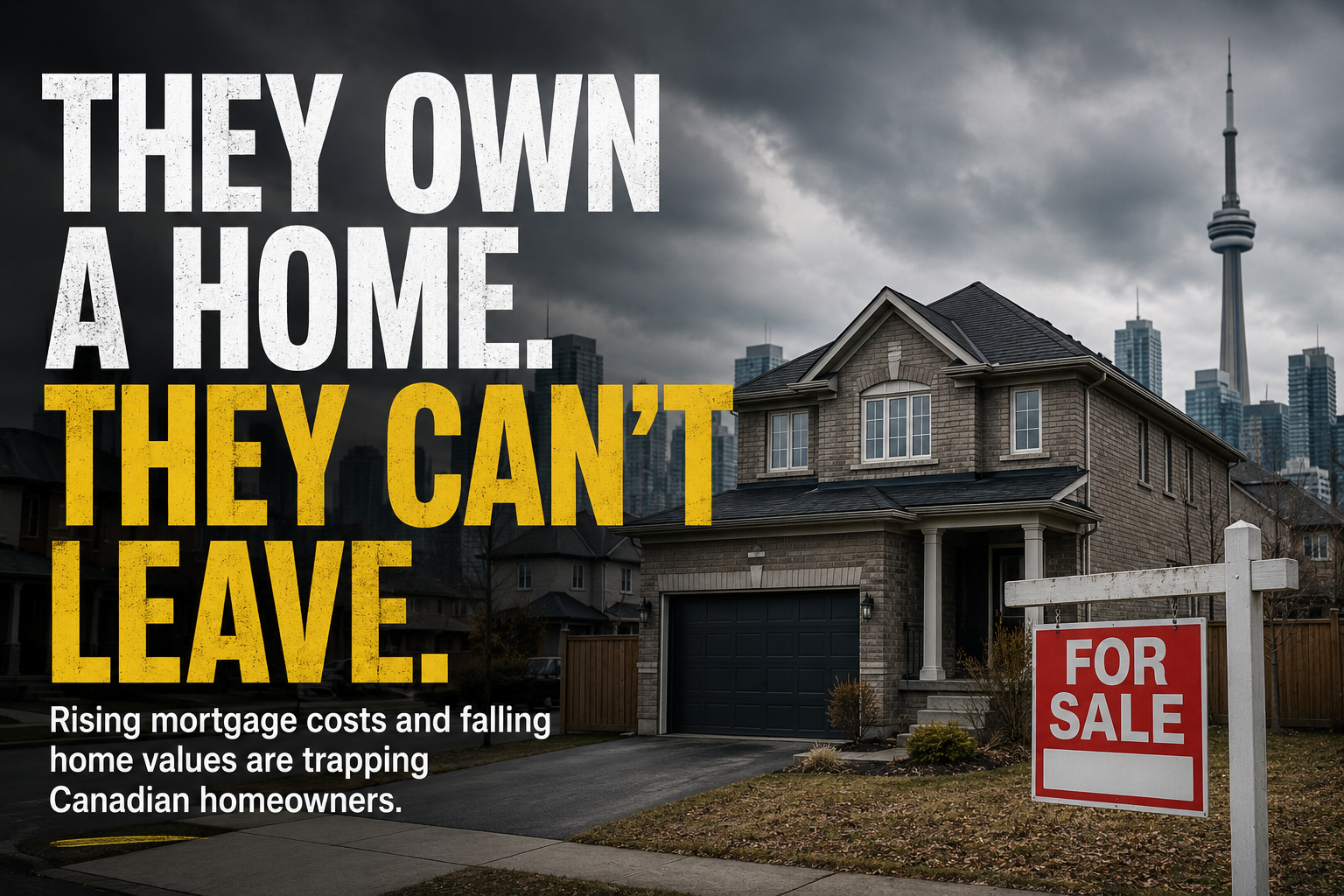
Canadian homeowners are increasingly finding themselves trapped in homes that no longer fit their needs. Ironically, many people who successfully entered the housing market years ago now face financial barriers that prevent them from moving up, downsizing, or relocating.
Why More Homeowners Are Staying Put Despite Changing Needs
The financial reality of homeownership has shifted dramatically since the pandemic-era housing boom.
Many homeowners secured mortgages when interest rates were exceptionally low. As those loans come up for renewal, monthly housing costs are rising sharply, creating a significant financial burden.
Current fixed mortgage rates remain far above the levels many borrowers locked in several years ago. For homeowners carrying substantial mortgage balances, renewal can translate into thousands of dollars in additional annual interest costs.
The result is a growing reluctance—or inability—to move.
The Financial Pressures Creating Housing Gridlock
Several forces are combining to restrict movement across Canada's housing market.
-
Mortgage renewals are increasing monthly payment obligations for many households.
-
Some homes purchased near peak pandemic valuations have experienced price declines, particularly in parts of Southern Ontario and British Columbia.
-
Homeowners with outstanding mortgage balances exceeding current property values may face negative equity, making it difficult to sell without contributing additional cash.
-
Property taxes, maintenance expenses, and other ownership costs have continued to rise, reducing available household cash flow.
These pressures are limiting flexibility at a time when many families would normally be considering a move.
The Growing "Second-Time Homebuyer" Challenge
The affordability crisis is no longer limited to first-time buyers.
Families that purchased starter homes years ago are discovering that moving into larger properties has become financially unrealistic. Higher interest rates and stricter qualification requirements have dramatically increased the income needed to purchase move-up homes.
In many markets, qualifying for a home valued around $1 million can require household income exceeding $180,000 annually.
That creates a difficult situation for middle-income families whose housing needs have expanded but whose purchasing power has effectively declined.
The traditional housing ladder is becoming harder to climb.
Why the Market Faces a Mobility Problem
Housing markets function most efficiently when homeowners can move according to changing life circumstances.
Growing families typically upgrade to larger homes. Empty nesters often downsize. Workers relocate for new opportunities. When financial barriers prevent those moves, housing inventory becomes less available throughout the market.
The current environment is creating a chain reaction:
-
Families remain in homes that are too small.
-
Potential downsizers postpone selling.
-
Fewer properties become available for buyers.
-
Overall market activity slows.
This dynamic contributes to reduced liquidity and limits the normal flow of housing supply.
What Comes Next for Canadian Homeowners
Mortgage renewals are expected to remain a major financial event for homeowners over the coming years.
Many households will continue reassessing budgets as they transition from pandemic-era borrowing costs to higher-rate environments. At the same time, homeowners dealing with weaker property valuations may remain cautious about listing their homes.
Until borrowing costs, affordability conditions, or housing supply dynamics improve, many owners may continue delaying major housing decisions.
For a growing number of Canadians, the challenge is no longer buying a first home. It is finding a path to the next one.
FAQ: Brief Insights on Canadian Housing Gridlock
Why are homeowners struggling to move in 2026?
Many face higher mortgage payments, stricter lending requirements, and home values that have not risen enough to support a profitable move.
What is the second-time homebuyer problem?
It refers to existing homeowners who need a larger home but cannot qualify for or afford the significantly higher costs of upgrading.
What is negative equity in housing?
Negative equity occurs when the remaining mortgage balance exceeds the current market value of the property.
Why are mortgage renewals causing concern?
Many borrowers are renewing loans that were originally obtained at much lower interest rates, leading to substantial payment increases.
Related Perspectives
-
Mortgage Renewal Strategies in Canada
-
Southern Ontario Housing Market Trends
-
Canadian Home Affordability Challenges