
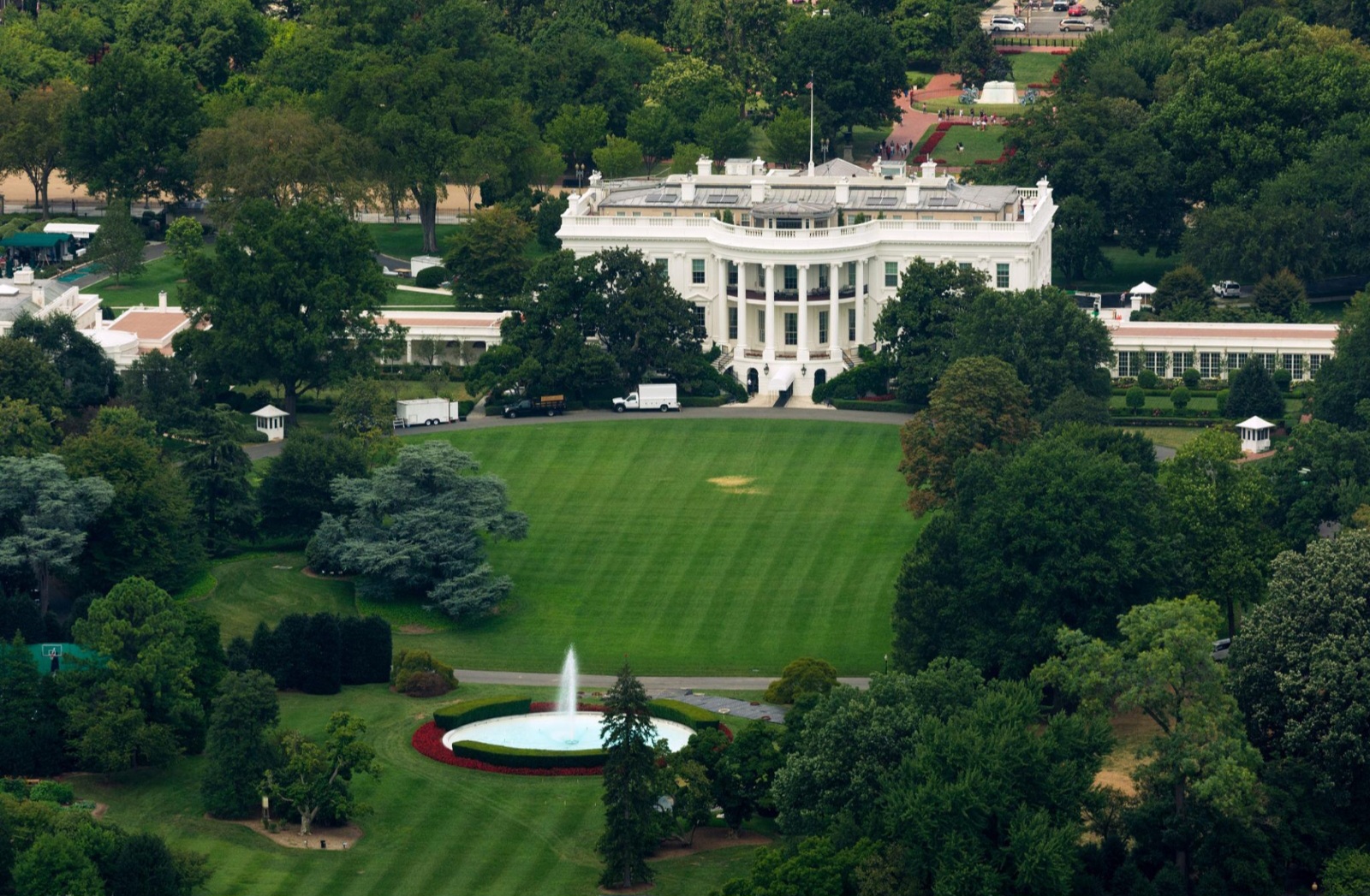
The White House has long symbolized the institutional power of the American presidency. Donald Trump's decision to host a UFC event on its grounds has therefore become more than a sporting story. It has evolved into another chapter in the transformation of politics into spectacle.
Supporters viewed the event as an unconventional celebration. Critics, however, saw something deeper: the continued erosion of boundaries between governance, entertainment, and personality politics.
A Historic Venue Meets Combat Sports
The event, organized alongside UFC president Dana White, featured professional mixed martial arts bouts on the South Lawn of the White House.
The occasion coincided with celebrations surrounding America's 250th anniversary and Trump's 80th birthday.
Thousands attended, while prominent political figures, business leaders, and celebrities were present.
What made the event unusual was not merely the fights themselves, but their setting. The White House traditionally represents statecraft and diplomacy. Hosting a cage fight in such a location immediately triggered debate about symbolism and presidential norms.
The Trump Era Has Repeatedly Blurred Traditional Boundaries
Trump's political career has consistently mixed entertainment and politics.
From campaign rallies resembling live productions to his close relationship with sports personalities and media figures, spectacle has remained central to his public image.
The UFC event represented another example of this approach.
Critics argued that the presidency increasingly appeared less like an institution and more like a personal brand. Supporters countered that Trump was simply embracing popular culture and appealing to audiences often overlooked by traditional political elites.
Critics See a Sign of America's Growing Political Polarization
Opponents questioned whether the White House should serve as a venue for highly commercial and politically charged spectacles.
Some observers argued that the event reflected a broader shift in American politics, where institutions are becoming increasingly personalized and public attention is driven by entertainment value rather than policy discussions.
Concerns also emerged over optics.
At a time when the United States faces challenges ranging from geopolitical tensions to economic uncertainty, critics argued that the symbolism of transforming the White House into an arena projected a different image of presidential leadership.
Politics and Entertainment Are Becoming Harder to Separate
The controversy surrounding the event extends beyond Donald Trump.
American politics has gradually become more intertwined with celebrity culture, social media, and performance-driven communication.
Modern political campaigns increasingly compete for attention in the same information ecosystem occupied by athletes, influencers, and entertainers.
The UFC event therefore represents something larger than a single night of fights.
It illustrates how political legitimacy, media attention, and public engagement are increasingly shaped by spectacle.
A Debate About Institutions, Not Just One Event
For supporters, the White House UFC card demonstrated cultural confidence and an ability to connect politics with popular interests.
For critics, it symbolized the weakening of institutional norms and the growing tendency to prioritize showmanship over statesmanship.
That debate is unlikely to disappear.
Because the real question raised by the event is not whether a UFC fight belongs at the White House.
It is whether the boundaries that once separated politics from entertainment are disappearing altogether.
FAQ: Trump's White House UFC Event
Why did Trump host a UFC fight at the White House?
The event was framed as part of celebrations surrounding America's 250th anniversary and Trump's 80th birthday.
Why has the event been controversial?
Critics argue that using the White House for a combat sports spectacle blurs the line between governance and entertainment.
Who organized the event?
The event was closely associated with UFC president Dana White, a longtime Trump ally.
Did everyone oppose the idea?
No. Supporters viewed it as a celebration of American culture and a way to connect with broader audiences.
Why is the symbolism important?
Because the White House has historically represented diplomacy and institutional authority rather than entertainment events.
Sources
-
Reuters, "White House's UFC fights concentrate Trump's sporting, political and economic power" https://www.reuters.com/business/media-telecom/trump-hosts-white-house-cage-fights-amid-war-political-scrutiny-2026-06-14/
-
Reuters, "Trump's UFC fight at White House combines punches and politics" https://www.reuters.com/world/us/trumps-ufc-fight-white-house-combines-punches-politics-2026-06-12/
-
Reuters, "Few Americans back Trump's White House cage match plan, Reuters/Ipsos poll finds" https://www.reuters.com/world/us/few-americans-back-trumps-white-house-cage-match-plan-reutersipsos-poll-finds-2026-06-11/
-
Reuters, "US judge won't block Trump's White House mixed martial arts event" https://www.reuters.com/world/us-judge-wont-block-trumps-white-house-ufc-mixed-martial-arts-event-2026-06-12/
-
Reuters, "Trump's grand sporting season begins with UFC fights on White House lawn" https://www.reuters.com/sports/trumps-grand-sporting-season-begins-with-ufc-fights-white-house-lawn-2026-06-12/
-
Reuters, "Trump says July 4 National Mall celebration will double as a Trump rally" https://www.reuters.com/business/media-telecom/trump-says-july-4-national-mall-celebration-will-double-trump-rally-2026-06-15/
-
PBS NewsHour, "Lawsuit Aims to Block UFC Fight on White House South Lawn" https://www.pbs.org/newshour/nation/lawsuit-aims-to-block-ufc-fight-on-white-house-south-lawn-for-trumps-birthday
-
TIME, "Inside Dana White's Plan for a White House UFC Fight" https://time.com/article/2026/05/26/dana-white-ufc-white-house-fight-interview/