
On February 28, 2026, the United States and Israel launched nearly 900 airstrikes against Iran in twelve hours, killing the country's supreme leader in the opening minutes. Four months and, by some economists' estimates, close to $1 trillion in economic damage later, the war has ended with a memorandum that critics on both sides of the US political aisle say looks remarkably like the situation that existed before the first bomb fell.
How the War Began: A Diplomatic Track Abandoned for Overwhelming Force
The strikes that opened the war, codenamed Operation Epic Fury by Washington and Roaring Lion by Israel, hit nearly 900 targets in twelve hours: missile sites, air defenses, military infrastructure, and Iran's senior leadership. The first wave killed Supreme Leader Ayatollah Ali Khamenei and injured his son and eventual successor, Mojtaba. Washington and Jerusalem framed the operation as the product of a shared conclusion that diplomacy had run its course and that a nuclear-armed Iran posed an unacceptable threat.
The timing tells its own story. Indirect talks mediated by Oman had reportedly produced real movement just weeks earlier, with Iran signaling openness to concessions on its nuclear program. Omani mediators have since said a deal was "within reach" when the strikes began anyway. Whatever calculus drove that decision, it set the tone for everything that followed: a war launched on the premise that force could deliver what negotiation could not, against four months of evidence to the contrary.
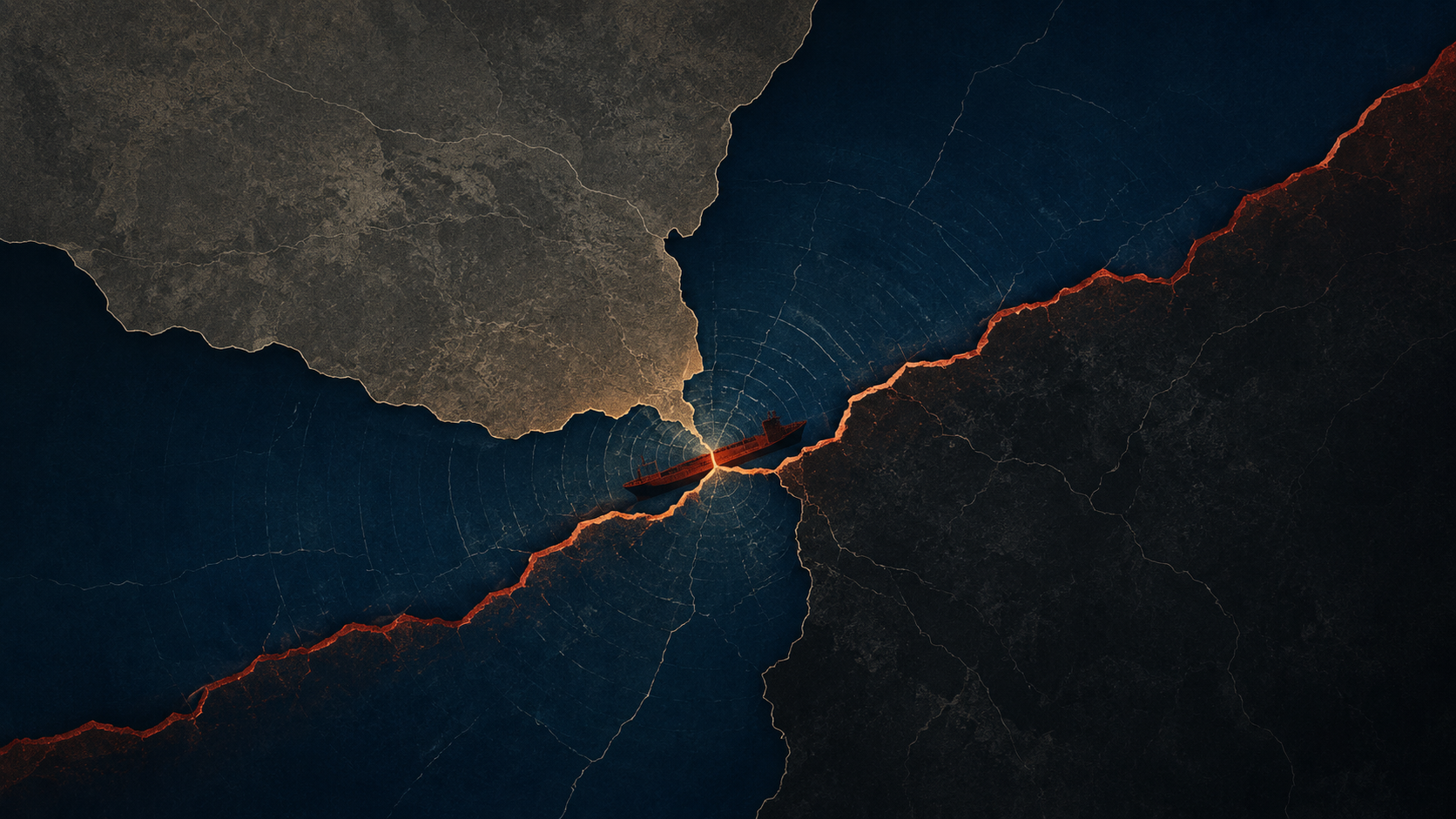
Iran's response was immediate and dwarfed the scale of the opening attack. Within hours, Iranian forces mined and blockaded the Strait of Hormuz with fast attack boats and anti-ship missiles, cutting off roughly a fifth of the world's daily oil supply, while launching what is reportedly the largest ballistic missile barrage in the country's history, more than 500 missiles aimed at US bases and allied facilities across seven countries. Oil prices spiked from around $75 to over $130 a barrel within 48 hours.
This is the war's first irony, and arguably its defining one. A campaign justified partly on the grounds of regional stability and energy security instead produced, in the words of the International Energy Agency's director, "the greatest energy security challenge in history." Analysts at the Global Peace Index later called it the "Hormuz paradox": the war meant to secure the strait caused its closure, stranding an estimated 13 million barrels a day of Gulf exports that Saudi Arabia and the UAE could only partially reroute through alternative pipelines.
Four Months of Escalation: Proxies, a New Supreme Leader, and Repeated Ultimatums
The fighting that followed widened rather than narrowed. The deadliest single strike on Israeli civilians came on March 1, when an Iranian missile hit a residential neighborhood in Beit Shemesh, killing nine people, part of a campaign that left 28 Israelis dead and over 4,200 injured by the war's end. Iran's Revolutionary Guard and its regional proxy network, Hezbollah, the Houthis, Iraqi militias, activated in parallel, and one tracker counted more than 200 strikes across Iran, Lebanon, Yemen, Iraq, and the Gulf, with casualties spread unevenly: the vast majority Iranian, but with significant tolls in Lebanon, Iraq, the Gulf states, and Yemen as well.
Iran's leadership transition happened under fire, which is itself almost unheard of for a state of Iran's size. Mojtaba Khamenei, who had never held an elected or appointed government post, was named successor by the Assembly of Experts while strikes continued over Tehran. Trump's reaction was unusually blunt for a foreign leadership question: he told Axios the younger Khamenei was "a lightweight" and that he wanted a say in who came next, later telling ABC that any new Iranian leader "is not going to last long" without his approval. It was an admission, intentional or not, that the war's goals extended well beyond degrading Iran's military, into who would govern the country afterward.
The rhetoric escalated to match. On March 6, Trump declared that only Iran's "unconditional surrender" would do, threatening to bomb energy infrastructure and bridges if no deal was reached, and setting a deadline of March 21. That deadline slipped to March 23, then to April 7, each extension quietly conceding that the previous one hadn't produced the leverage it promised. What finally broke the cycle wasn't an ultimatum but outside mediation: on April 8, Pakistan brokered a conditional two-week ceasefire, the first real pause in 40 days of combat.
"Ceasefire" proved to be a generous word. On May 7, the US struck targets in southern Iran and Tehran again, calling it self-defense after Iran allegedly targeted US warships enforcing the ongoing naval blockade. The pattern that emerged wasn't an end to hostilities so much as a lower, intermittent simmer.
What the War Actually Cost
The accounting is still unfinished, and the numbers vary wildly depending on who's doing the math, which is itself revealing. The Pentagon told Congress the first six days alone cost $11.3 billion, plus roughly $1 billion a day after that. By month three, Defense Secretary Pete Hegseth put the total at $25 billion, mostly munitions and maintenance, a figure Democratic lawmakers and independent economists immediately called a lowball. Harvard's Linda Bilmes has estimated the true cost to the US economy at closer to $1 trillion, with other analysts landing somewhere between $630 billion and that figure.
The interceptor math alone captures the asymmetry: the US fired more Patriot missiles in the war's first four days than it had supplied to Ukraine over the previous four years, at roughly $4 million per interceptor, against Iranian drones worth a fraction of that. Two weeks in, the International Energy Agency had released 400 million barrels from global reserves, 172 million of them from America's own Strategic Petroleum Reserve, while US gas prices climbed to $3.63 a gallon, up 55 cents from the year before.
Globally, the Global Peace Index put 2026 GDP losses at roughly $1.3 trillion under its most likely scenario, and warned that a resumption of fighting could push that figure to $2.2 trillion. That second number is worth sitting with: it reframes the current ceasefire not merely as the end of a costly war, but as an asset in its own right, one whose value is measured by the much larger loss a relapse would cause.
A War That Produced the Opposite of Its Goals, By One Influential Account
Here is where the story's central irony sharpens into something close to a verdict. One detailed cost analysis argues the strikes had already achieved the opposite of their stated aims by the time the ceasefire took hold: rather than deterring Iran, they triggered its largest military mobilization in the Islamic Republic's history; rather than degrading its capabilities, they consolidated regional proxy support behind it; and rather than isolating Iran, they may have pushed it toward closer cooperation with Russia and China, the very powers the strikes were arguably meant to box out. That's one analysis, not a consensus, but it captures a tension that runs through nearly every retrospective account.
The nuclear question, the war's stated justification, remains genuinely unresolved. US officials initially said strikes on Fordow, Natanz, and Isfahan caused "extremely severe damage," destroying Natanz and badly damaging the other two, with a Pentagon assessment putting Iran's program back roughly two years. A leaked DIA report instead concluded the damage fell short of destruction and the delay was likely measured in months. Israeli intelligence reportedly landed somewhere in between: damaged, but not destroyed. Iran itself initially called the damage "superficial," while the IAEA called it "enormous." None of these assessments have converged, and the new memorandum doesn't resolve the question, it punts it into 60 more days of talks.
The Deal on the Table, and Why It May Not Hold
The agreement set for signing in Geneva follows the broad outline reported by Iran's state media: an immediate, permanent end to fighting on every front including Lebanon, a US pledge to lift its naval blockade and withdraw forces within 30 days, reopening of the Strait of Hormuz on Iran's terms, and release of $24 billion in frozen Iranian assets during a 60-day negotiating window covering everything the war was supposedly fought over. Neither government has officially confirmed those specifics, and Iranian state media is not a neutral source, so the details should be read as the likely shape of the deal rather than its final text.
What's clearer is how experts are framing it: not as a peace treaty, but as a memorandum of understanding, a framework for future talks rather than a resolution. One Middle East Institute fellow put it about as bluntly as anyone has: the deal "basically takes us back to the situation that we were in right before the war." If that holds, four months of war, a trillion-dollar bill, a head of state's assassination, and the largest oil shock on record produced an outcome that, in its essential shape, was sitting on the table in February.
That gap between cost and outcome has produced an unusual alignment in Washington. Representative Seth Moulton called the terms "basically a surrender document," noting roughly $100 billion spent and 14 Americans dead for a deal that "just reopens the strait that was already open" before the war started. Representative Gregory Meeks called the entire campaign "a war of choice" that was "misguided and detrimental to American interests." And on the other side, Senator Lindsey Graham, one of the war's strongest Senate backers, called aspects of the ceasefire "troubling" even while continuing to support the diplomatic process. Critics and supporters of the war, for once, sound like they're reading from the same page.
Two risks now hang over whatever gets signed. The first is Hormuz itself: without a durable follow-up agreement specifically addressing the strait, the arrangement is likely to stay volatile, and the US could slide back into conflict with Iran. Crucially, Iran has now proven, not just threatened, that it can shut the strait down. That capability doesn't vanish with a signature; it becomes a permanent card Tehran can threaten to play in any future dispute.
The second risk is Israel, which fought this war but isn't a party to the US-Iran memorandum. By multiple accounts, Israel opposes any deal and may use its leverage to undermine one, especially if the terms look favorable to Tehran, and the fact that Israeli strikes on Beirut nearly derailed the talks days before the announcement isn't an encouraging precedent. A peace process between two parties that depends on a third party's restraint, one who wasn't at the table, is inherently less stable than one that doesn't.
Put together, "peace deal" may be doing more work than the agreement itself can bear. What's actually been reached looks like a pause: a restoration of pre-war conditions on the ground and in the markets, paired with a promise of talks on the questions that started the war in the first place. Whether it lasts depends less on the signing ceremony in Geneva than on what happens in the 60 days after it, and on whether Washington, Tehran, or Jerusalem decides the underlying disputes are worth reopening the war to settle.
Related Perspectives
The Assassination of Ali Khamenei and Iran's Succession Crisis
The Strait of Hormuz and Global Oil Supply Chains
Congressional Oversight of US War Spending in 2026
Sources
- Britannica, "2026 Iran War: Deal, Explained"
- AJC, "The Iran Strikes, Explained: How We Got Here and What It Means"
- House of Commons Library, "Israel/US-Iran conflict 2026: Background and UK response" and "US-Iran ceasefire and nuclear talks in 2026"
- The Conversation, "A peace deal may bring an end to the Iran war, but what did the US and Israel truly achieve?" and "US-Iran war: what the 'peace deal' really means"
- WarCosts.org, "Iran War (2026) — Cost, Casualties & Analysis"
- Vision of Humanity / Global Peace Index, "The Hidden Price of the Iran War"
- Wikipedia: "2026 Iranian strikes on Israel", "7 May 2026 United States strikes on Iran", and "2025 United States strikes on Iranian nuclear sites"
- AP via PBS, reporting on Mojtaba Khamenei's succession
- Al Jazeera: "$25bn or $1 trillion: How much has Iran war really cost the US?" and "Trump allies cheer Iran 'peace deal' announcement as Democrats seek clarity"
- Iran War Cost Tracker, iran-cost-ticker.com
- NPR, "These are the casualties and cost of the war in Iran 2 weeks into the conflict"
- Iran International, reporting on the draft memorandum
- Times of Israel, "US, Iran reach deal to end war"
- Atlantic Council, "Experts react: The US and Iran just announced an interim peace deal"
- NBC News, live coverage of the deal announcement
- Fox News, coverage of Senate reaction to the ceasefire