
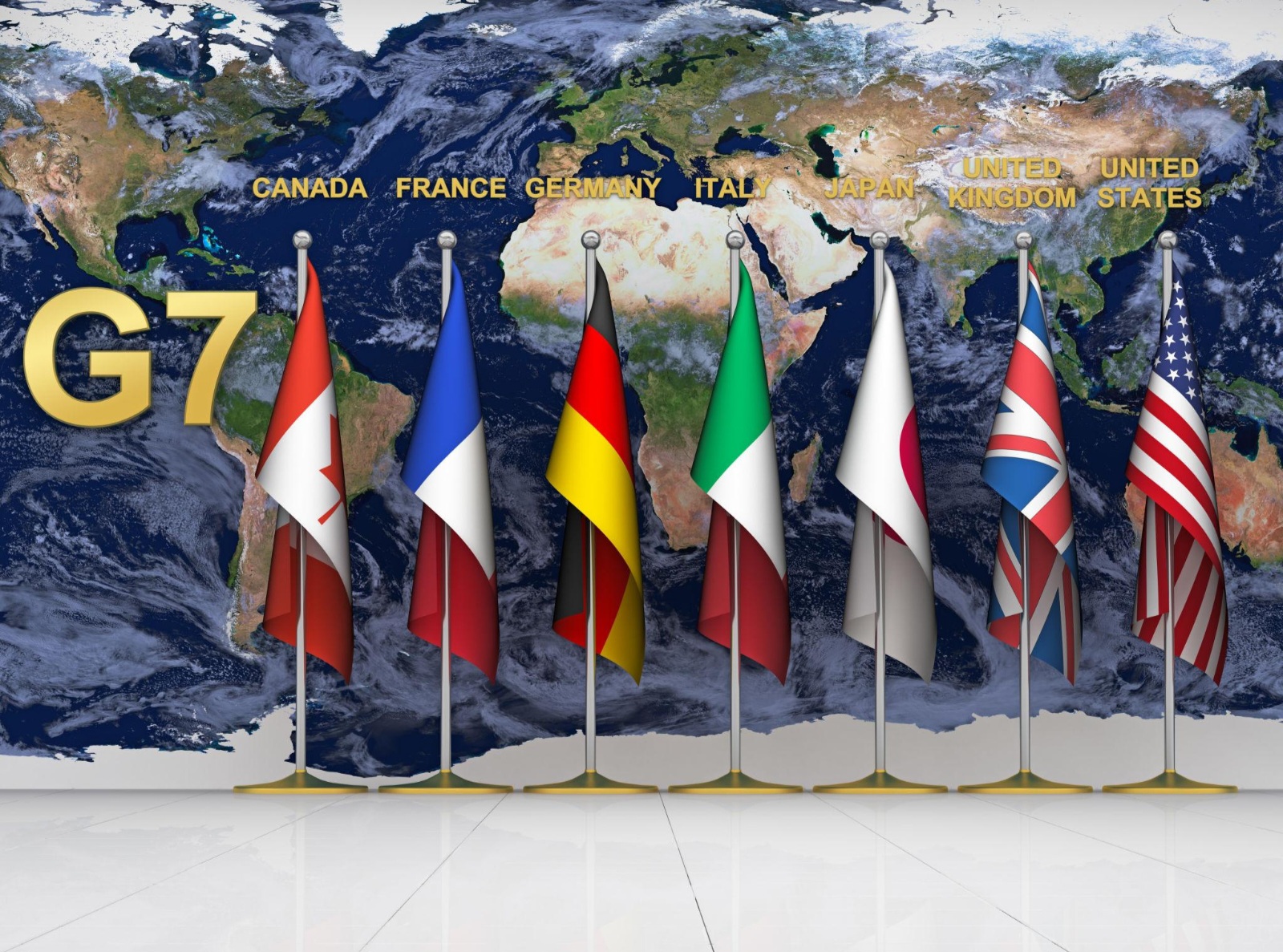
International summits were originally designed to address economic challenges. Today, many of the issues confronting world leaders lie far beyond interest rates and growth forecasts.
As the G7 prepares to meet in France next week, conflicts in Ukraine and the Middle East, competition over strategic resources, and growing tensions among allies are increasingly shaping the agenda.
Wars And Strategic Rivalries Are Moving To The Forefront
The G7 summit in Évian-les-Bains, France, will take place from June 15 to June 17.
Although economic coordination remains part of the group's mission, recent preparations suggest that geopolitical crises are likely to dominate discussions. France has spent months trying to preserve unity among allies while managing differences over several international issues. 1
The list of concerns extends well beyond traditional economic matters:
-
Russia's war in Ukraine.
-
Instability across the Middle East.
-
Competition over critical minerals.
-
Global economic imbalances.
-
The growing importance of advanced technologies.
-
Diverging priorities among allies.
Even summit security preparations reflect the increasingly complex environment surrounding international diplomacy. Switzerland and France have coordinated military and border measures ahead of the gathering. 2
Why The G7 Looks Different From Earlier Decades
The Group of Seven emerged as a forum focused primarily on economic coordination among advanced economies.
Over time, however, geopolitical crises have steadily expanded its scope. Energy security, wars, sanctions, and technological competition now occupy much of the diplomatic agenda. France has described the 2026 presidency as an effort to combine economic cooperation with responses to geopolitical and energy challenges. 3
That evolution reflects broader changes in the international system.
Economic issues no longer exist in isolation. Supply chains, energy markets, semiconductors, and critical minerals have become deeply intertwined with national security.
Why Consensus Is Becoming More Difficult
Shared economic interests once made cooperation easier.
Today's environment is more fragmented.
Countries often agree on the importance of stability but differ on how to respond to wars, trade disputes, and relations with major powers. Analysts expect the final communiqué from this year's summit to be more targeted than sweeping because of those differences. 4
This changing landscape has increased the importance of diplomacy before the summit itself.
Readers interested in the broader evolution of this year's gathering can explore "Why This Year's G7 Summit Is About More Than Economic Growth":
https://twikup.ca/world/global-politics/why-this-years-g7-summit-is-about-more-than-economic-growth
Geopolitical uncertainty has also become a major concern for financial markets. TwikUp recently examined this issue in "Why Investors Fear Uncertainty More Than Oil Prices in the US-Iran Conflict":
Meanwhile, developments on the battlefield continue to influence strategic discussions among Western governments. More background is available in "Ukraine Says It Has Regained Ground in 2026":
https://twikup.ca/world/global-politics/ukraine-says-it-has-regained-ground-in-2026
A New Era For International Gatherings
Economic growth has not disappeared from the agenda.
Instead, it is increasingly being discussed through the lens of security, resilience, and strategic competition.
Critical minerals are no longer merely commodities. Supply chains are no longer just business questions. Emerging technologies are increasingly viewed as strategic assets.
As a result, international summits are evolving into forums where economic and geopolitical concerns are inseparable.
That shift may become one of the defining features of global diplomacy in the years ahead.
What To Watch At The G7
Several themes are expected to shape the discussions:
-
Support for Ukraine.
-
Developments in the Middle East.
-
Critical mineral cooperation.
-
Competition in advanced technologies.
-
Efforts to maintain unity among allies.
Whether the summit produces major breakthroughs or simply manages disagreements, its agenda highlights how international priorities have changed.
FAQ: Brief Insights on Geopolitics and the G7
Why are geopolitical issues dominating the G7?
Wars, supply chain vulnerabilities, and strategic competition have increasingly intertwined economic and security concerns.
Has the G7 stopped focusing on economic issues?
No. Economic topics remain important, but they are now closely linked to national security and geopolitical challenges.
Related Perspectives
Why This Year's G7 Summit Is About More Than Economic Growth
https://twikup.ca/world/global-politics/why-this-years-g7-summit-is-about-more-than-economic-growth
Why Investors Fear Uncertainty More Than Oil Prices in the US-Iran Conflict
Ukraine Says It Has Regained Ground in 2026
https://twikup.ca/world/global-politics/ukraine-says-it-has-regained-ground-in-2026