
Key Takeaways
- Climate-related insurance costs are increasingly relevant to the affordability of owning a Canadian property.
- Flood coverage, deductibles and policy exclusions can differ substantially between properties, even within the same community.
- A property's resale prospects may weaken when buyers become concerned about recurring damage, expensive coverage or limited insurance options.
Why Is Climate Risk Becoming a Real Estate Insurance Issue in Canada?
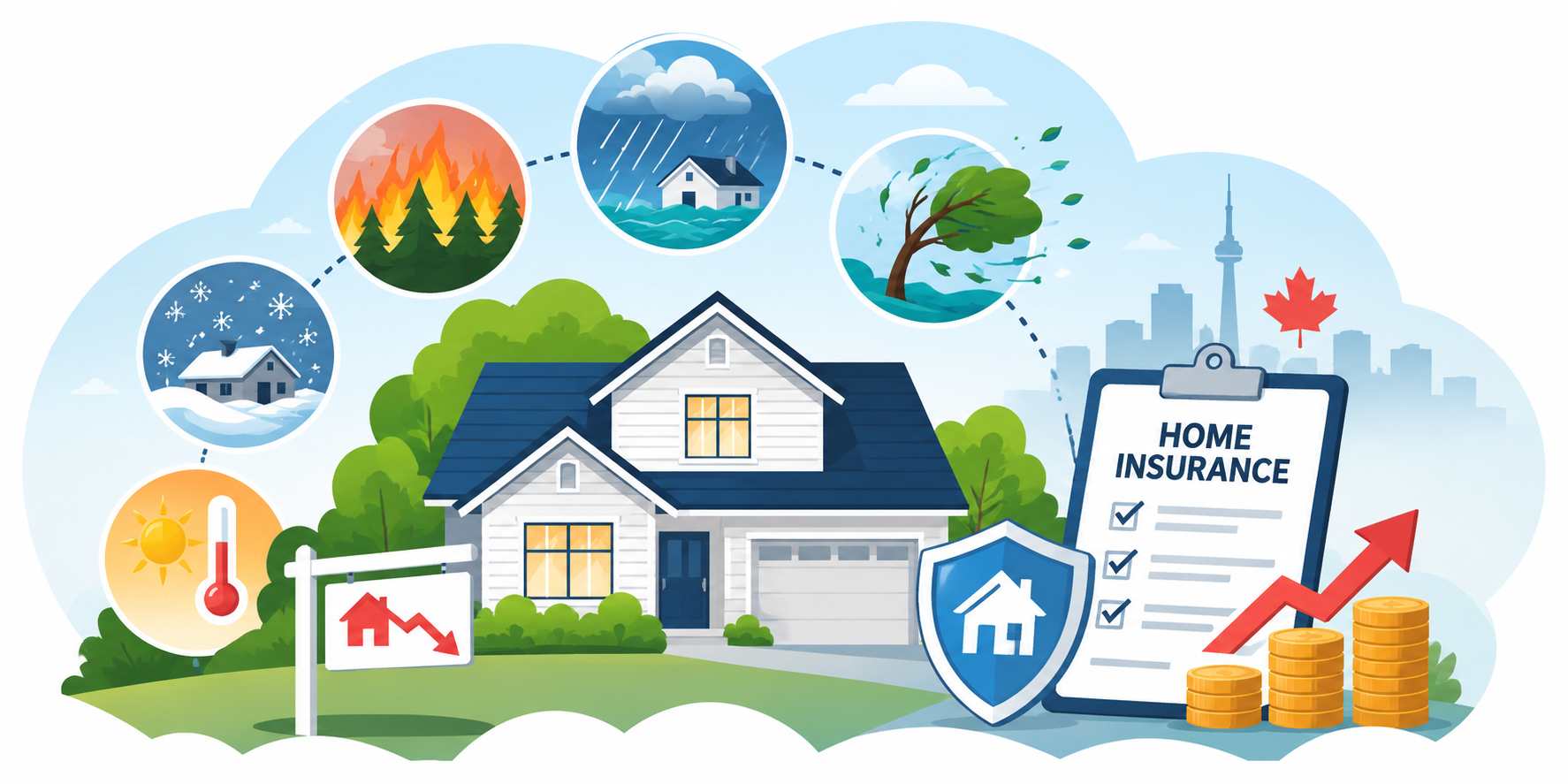
Climate risk is becoming a financial consideration for Canadian property owners, not simply an environmental concern. Flooding, wildfires, severe storms and extreme rainfall can damage homes, increase insurance claims and make certain properties more expensive or difficult to insure. These factors may also influence buyer confidence and resale values.
Statistics Canada reported that homeowners' home and mortgage insurance premiums increased 45% between December 2019 and December 2025. Over the same period, the all-items Consumer Price Index rose 21%. The figures show why insurance deserves closer attention when evaluating a property's long-term affordability.
For 2027 buyers, the important question is not whether every climate-exposed home will lose value. It is whether the property's location, insurance conditions and history of damage could make ownership less attractive.
Which Climate Risks Could Affect Canadian Properties?
Flooding is one of the most important risks to investigate. Heavy rainfall, overflowing rivers, coastal water and overwhelmed drainage systems can damage basements, foundations, electrical systems and personal belongings. Properties in low-lying areas or locations with repeated water problems may require more careful assessment.
Wildfires create a different set of concerns, particularly for homes near forests and communities surrounded by vegetation. Smoke, direct fire damage, evacuation requirements and disruption to local infrastructure can affect the attractiveness of an area.
Severe storms, hail, wind and freezing-related damage can also increase repair costs. Canada's changing climate report indicates that heavy precipitation events are expected to become more frequent, adding pressure to flood protection and insurance planning.
Can Climate Risks Increase Home Insurance Premiums?
Yes. Insurers consider location, property characteristics, replacement costs, coverage limits and the likelihood of claims when setting premiums. A home exposed to greater flood or wildfire risk may face a higher price, a larger deductible or restrictions on certain coverage.
Flood insurance deserves particular attention. Standard Canadian home insurance policies usually do not cover water entering from outside the property. Homeowners may need additional overland flood protection, while sewer backup may require separate or specific coverage.
The Financial Consumer Agency of Canada also warns that insurers may decline flood coverage for properties in very high-risk areas. Therefore, a low advertised insurance estimate should never be treated as confirmation that the required protection is available.
How Could Insurance Problems Affect Property Values?
Insurance affects the practical cost of owning a home. If coverage becomes expensive, difficult to obtain or subject to high deductibles, potential buyers may reconsider their offers.
CMHC's research on catastrophic flooding examined five Canadian communities, including Toronto, Ottawa, Burlington, Gatineau and Grand Forks. Its findings showed an average 8.2% reduction in final sale prices for affected homes, alongside 19.8% more days on the market.
These results demonstrate a possible market reaction after serious flooding. They should not be interpreted as a guaranteed discount for every property located in a flood-prone area. Local demand, the severity of damage, repairs, insurance protection and neighbourhood conditions all matter.
A home with documented improvements and accessible insurance may remain more attractive than a similar property with unresolved water damage and uncertain coverage.
What Should Buyers Check Before Purchasing a Property?
Buyers should request an insurance quote before removing purchase conditions or completing the transaction. The quote should identify available coverage, exclusions, deductibles and any restrictions connected with the property's location.
They should also investigate local flood maps, drainage conditions, previous claims and visible signs of water entry. For properties near forests, buyers should examine vegetation around the building, access routes and local wildfire mitigation measures.
A professional home inspection can identify physical weaknesses, but it does not replace insurance confirmation or independent climate-risk research. Buyers should also ask whether previous damage was repaired properly and whether supporting documents are available.
TwikUp's Perspective
Climate risk should become part of the property comparison process in 2027. Two homes with similar prices can carry very different long-term costs when one has reliable insurance options and the other faces repeated flooding or expensive coverage.
Investors should include insurance costs, deductibles, repair reserves and potential resale difficulties in their financial calculations. Homebuyers should compare the total cost of ownership rather than choosing a property based only on its purchase price.
This approach also connects with broader questions about Canadian ownership expenses and regional housing conditions. Readers comparing markets can explore TwikUp's Ontario housing market forecast for 2027 before making a location-based decision. Climate resilience may not determine every property's future value, but ignoring it could leave buyers with costs they did not anticipate.
Disclaimer
This article is for general educational purposes and does not constitute insurance, legal, real estate or financial advice. Insurance coverage, premiums and property risks vary by location, insurer and individual policy. Buyers should consult a licensed insurance professional and qualified property inspectors before making a purchase decision.