
Key Takeaways
- Ottawa announced nearly $10 million for 24 clean-electricity and innovation projects in Atlantic Canada.
- The largest award is $4.5 million to Dartmouth's Salient Energy for residential zinc-ion battery systems.
- Nineteen smaller grants fund offshore-wind readiness work with Indigenous and coastal communities.
Nearly $10 million, spread four ways
A Dartmouth battery maker is getting $4.5 million. An offshore carbon-storage atlas is getting more than $3.4 million. And 22 other projects are sharing the rest.
That's how Ottawa is dividing nearly $10 million among 24 clean-electricity and innovation projects across Atlantic Canada.
Justice Minister Sean Fraser, who also oversees the Atlantic Canada Opportunities Agency, announced the funding Wednesday at the Marine Renewables Conference in Ottawa.
The money comes through four federal programs focused on energy innovation, modernizing electricity grids, reducing diesel use in remote communities and preparing for offshore wind development.
Where the big money goes
The biggest winner is Salient Energy Inc. of Dartmouth, Nova Scotia.
The company receives $4.5 million through the Energy Innovation Program to manufacture and validate rechargeable zinc-ion battery systems for Canadian households. Salient says the batteries could also have marine and military uses.
Next comes a project looking beneath the ocean.
Net Zero Atlantic in Halifax receives $3,431,497 to create a publicly available atlas showing potential offshore carbon-storage locations on the Scotian Shelf.
Solar power gets a share, too.
A partnership between Potlotek First Nation and AI Renewable in Annapolis County receives $960,000 toward a 4.8-megawatt solar project.
The Confederacy of Mainland Mi'kmaq gets another $373,526 for energy-efficiency and renewable-energy work across eight Mi'kmaw communities.
And then come the smaller cheques.
The remaining 19 projects receive between $10,000 and $40,000 each for offshore-wind preparation.
Rather than building turbines, these grants fund engagement and studies involving First Nations, fish harvesters and coastal communities in Nova Scotia and Newfoundland and Labrador.
The Twikup Take
The big cheques grab attention. The smaller ones could help determine what happens next.
Dartmouth gets battery development. Halifax gets an offshore carbon-storage atlas. Indigenous communities get support for solar power and energy improvements. And 19 smaller projects focus on the groundwork for offshore wind.
Nearly $10 million, 24 projects — and a reminder that building a cleaner energy future starts long before the turbines go up.
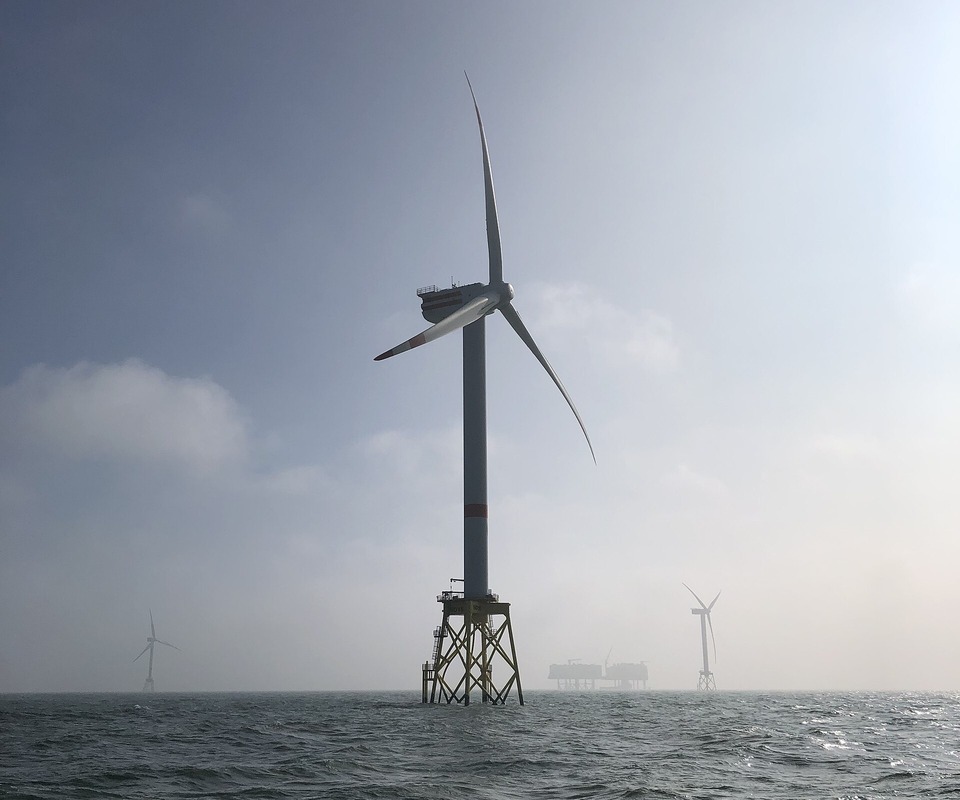
Image: An offshore wind turbine at the Nordsee Ost wind farm by Indium115, via Wikimedia Commons, CC BY-SA 4.0.