
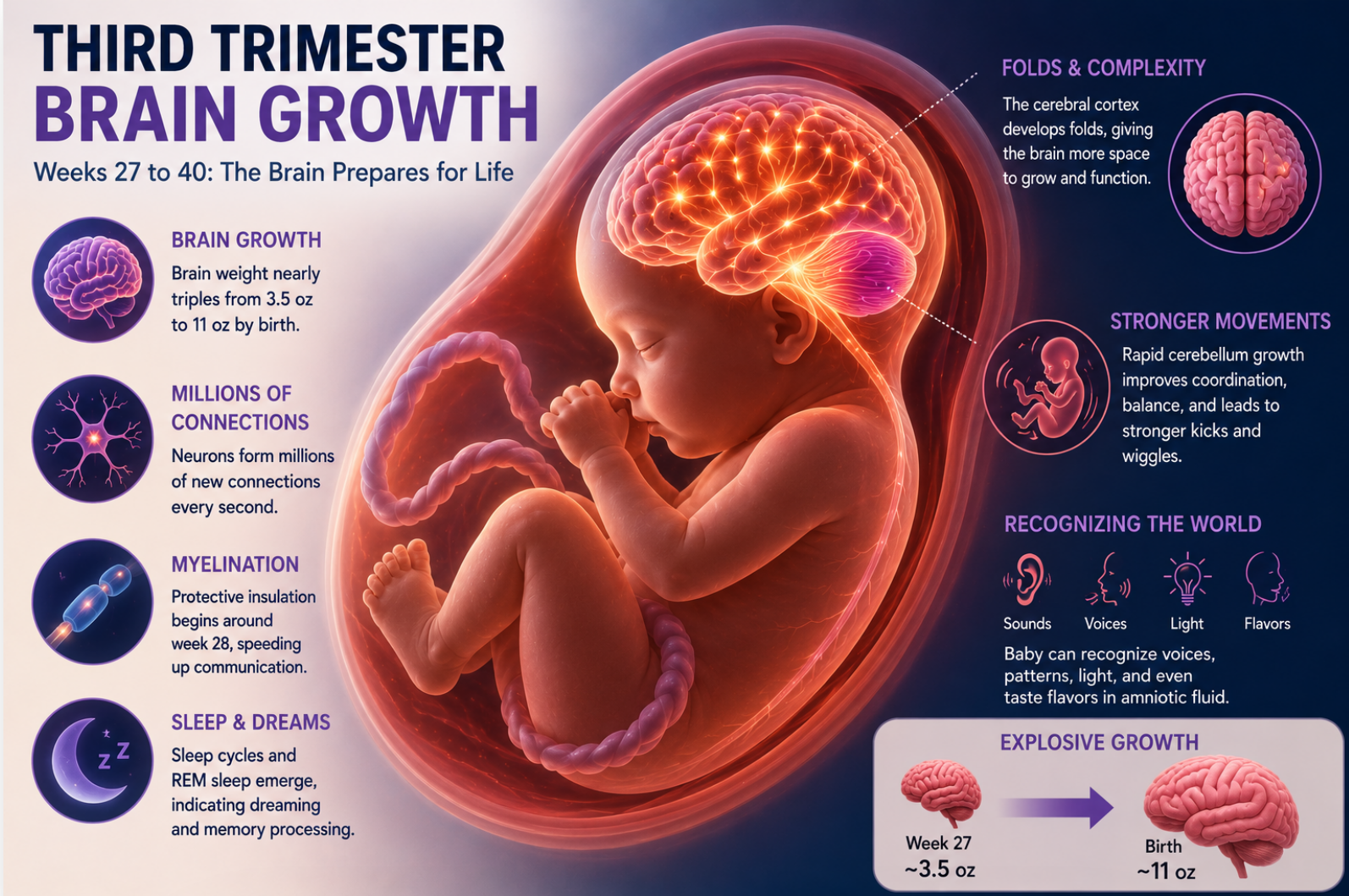
A baby's most dramatic neurological transformation occurs during the final months of pregnancy. Between weeks 27 and 40, the fetal brain nearly triples in weight, evolving from a relatively simple structure into a densely connected network capable of learning, memory formation, and sensory recognition.
By the time birth arrives, the brain has already begun preparing for the outside world. It can recognize voices, establish sleep cycles, process sensory information, and coordinate increasingly complex physical movements.
The Final Weeks Trigger a Brain Growth Explosion
The third trimester is the fastest period of fetal brain development.
Brain weight increases from approximately 3.5 ounces to around 11 ounces by birth. This growth is not simply about size. It reflects an extraordinary expansion of neural networks, communication pathways, and specialized brain regions that will support learning and survival after delivery.
During these weeks, the brain shifts from basic development to advanced organization.
Why the Brain Suddenly Begins to Wrinkle
Until late pregnancy, the surface of the fetal brain remains relatively smooth.
As new brain tissue expands rapidly, the cerebral cortex develops its characteristic folds, grooves, and ridges. This process allows a larger amount of brain tissue to fit within the limited space of the skull.
At the same time:
- The cerebral cortex becomes increasingly sophisticated.
- The cerebrum fully separates into left and right hemispheres.
- Regions associated with future language, reasoning, and movement continue maturing.
These structural changes create the foundation for complex cognitive abilities later in life.
Powerful Kicks Reflect a Rapidly Growing Cerebellum
Many parents notice stronger and more frequent movements during the third trimester.
The reason lies within the cerebellum, the fastest-growing area of the brain during this period. Its surface area can expand up to thirty times as it develops the systems responsible for balance, coordination, and motor control.
This neurological growth explains:
- Stronger kicks.
- Larger stretches.
- More noticeable rolls and wiggles.
- Increased physical responsiveness.
What feels like movement is actually evidence of a rapidly maturing nervous system.
Millions of Neural Connections Form Every Second
The most important activity occurs beneath the brain's surface.
Through a process called synaptogenesis, neurons establish millions of new synaptic connections every second. These pathways create communication networks linking different regions of the brain and body.
At the same time, another critical process begins.
Around week 28, nerve fibers start developing a protective coating known as myelin. This insulating layer improves the speed and efficiency of neurological communication, helping messages travel more rapidly throughout the nervous system.
Together, synaptogenesis and myelination create the infrastructure required for learning, memory, movement, and sensory processing.
The Moment Learning Begins Before Birth
One of the most remarkable developments of the third trimester is the emergence of early learning capabilities.
As the cerebral cortex becomes increasingly active, the fetus begins practicing habituation. This process allows the brain to recognize repeated, harmless stimuli and gradually reduce its response.
Several important milestones emerge:
- Distinct sleep and wake cycles appear.
- REM sleep develops, suggesting active dreaming.
- Familiar sounds become recognizable.
- Early memory processing begins.
- Responses to repeated noises become more selective.
These developments indicate that learning starts before birth, long before a child enters the outside world.
Recognizing Voices, Flavors, and Familiar Patterns
By the end of pregnancy, sensory systems are functioning at a surprisingly advanced level.
The fetus can:
- Recognize the mother's voice.
- Respond to familiar sound patterns.
- Detect changes in light and darkness.
- Experience flavors present in amniotic fluid.
- Practice crying movements.
The brain is no longer simply developing. It is actively interpreting information from its environment and storing early experiences.
Why Maternal Nutrition and Interaction Matter More Than Ever
The third trimester places enormous energy demands on fetal brain development.
Nutrients delivered through the placenta provide the building blocks required for neural growth, communication pathways, and memory systems.
Important nutritional priorities include:
- DHA and omega-3 fatty acids.
- Choline.
- Iron.
- Folate.
Foods such as eggs, fatty fish, leafy greens, nuts, and other nutrient-dense options help support these developmental processes.
Beyond nutrition, interaction also plays a role.
Talking, singing, reading aloud, or gently stroking the belly exposes the developing brain to sensory experiences that help strengthen emerging neural pathways.
Preparing for Life Beyond the Womb
The third trimester represents the final stage of prenatal brain construction.
Neural networks expand at unprecedented speed, sensory systems become increasingly refined, and learning capabilities begin to emerge. By birth, the brain has transformed into a highly interconnected organ prepared to continue its rapid development after delivery.
The remarkable truth is that some of life's earliest lessons may begin before a baby ever opens its eyes.
FAQ: Brief Insights on Third Trimester Brain Development
Does a baby really learn before birth?
Yes. The fetus develops habituation, recognizes repeated sounds, and begins forming early memory patterns during the third trimester.
Can babies recognize their mother's voice before birth?
Yes. By the end of pregnancy, the developing auditory system can identify familiar voices and recurring sound patterns.
Why do kicks become stronger in late pregnancy?
The cerebellum undergoes rapid growth, improving coordination, balance, and motor control, resulting in stronger movements.
What is myelination and why is it important?
Myelination is the process of coating nerve fibers with a protective layer that speeds up communication between brain cells and the rest of the body.
Medical Disclaimer
This article is intended for informational and educational purposes only and should not be considered medical advice. Research on fetal brain development describes general developmental patterns and does not predict individual outcomes.
Fetal growth and neurological development can vary between pregnancies. Readers should consult a qualified healthcare professional regarding pregnancy-related concerns, diagnosis, treatment decisions, or personalized medical guidance.