
Why Baby Nap Schedules Change So Quickly During Early Childhood
A baby's sleep schedule can transform several times within the first few years of life. What begins as scattered naps throughout the day gradually develops into a predictable routine, eventually leading to a single afternoon nap and, for many children, no naps at all.
The driving force behind these changes is developmental maturity. As the brain, body, and internal clock develop, sleep becomes more organized and consolidated.
From Around-the-Clock Sleep to Structured Rest
Nap schedules evolve alongside a child's neurological and biological development.
One of the most useful concepts for understanding these changes is the wake window—the amount of time a child can comfortably stay awake before needing sleep again.
As children grow older, wake windows lengthen and the number of naps naturally decreases.
The Newborn Stage: Sleep Without a Schedule
During the first four months, sleep is largely guided by biological needs rather than a predictable routine.
Typical patterns include:
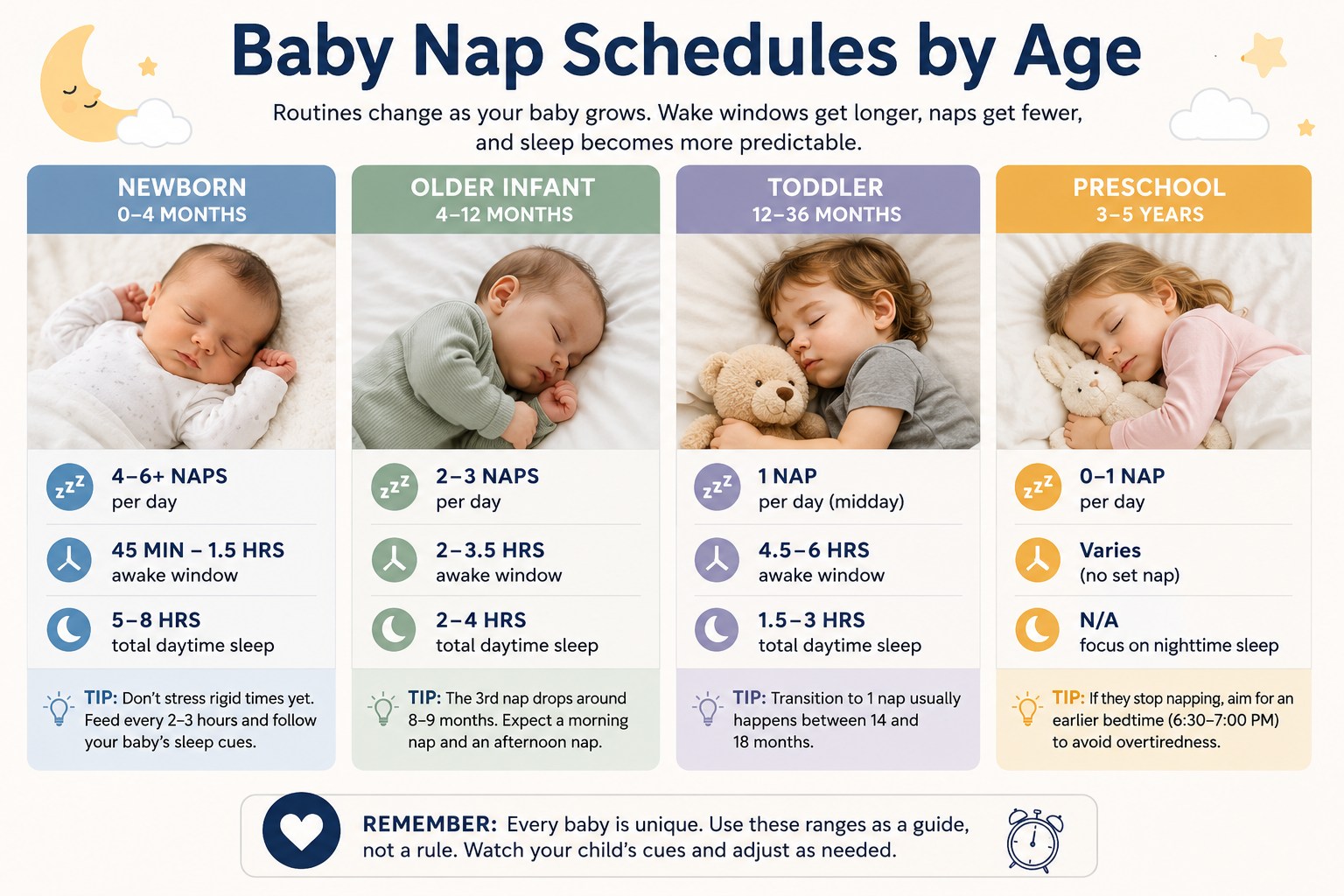
| Sleep Factor | Newborn (0–4 Months) |
|---|---|
| Number of Naps | 4–6+ naps daily |
| Awake Window | 45–90 minutes |
| Daytime Sleep | 5–8 hours |
Parents are generally encouraged to focus on feeding and responding to sleep cues rather than establishing strict nap times.
Because circadian rhythms are still developing, sleep occurs throughout both the day and night.
When Sleep Starts to Organize
Between four and twelve months, the body's internal clock becomes more established.
Typical patterns include:
| Sleep Factor | Older Infant (4–12 Months) |
|---|---|
| Number of Naps | 2–3 naps daily |
| Awake Window | 2–3.5 hours |
| Daytime Sleep | 2–4 hours |
During this stage, many infants gradually move toward a morning nap and an afternoon nap.
A third nap often disappears around eight to nine months as longer wake periods become manageable.
The Toddler Transition: One Nap Takes Over
Toddlerhood brings one of the most noticeable changes in daytime sleep.
Typical patterns include:
| Sleep Factor | Toddler (12–36 Months) |
|---|---|
| Number of Naps | 1 nap daily |
| Awake Window | 4.5–6 hours |
| Daytime Sleep | 1.5–3 hours |
The transition from two naps to one usually occurs between 14 and 18 months.
For many families, the afternoon nap becomes a consistent anchor point in the daily routine.
Preschool Years: Moving Beyond Naps
As children approach school age, daytime sleep gradually becomes less necessary.
Typical patterns include:
| Sleep Factor | Preschool (3–5 Years) |
|---|---|
| Number of Naps | 0–1 nap daily |
Many preschoolers naturally stop napping during this stage.
When naps disappear, earlier bedtimes often help prevent overtiredness and support adequate nighttime sleep.
Why Wake Windows Matter More Than the Clock
A common misconception is that every child should nap at the same time each day.
In reality, developmental readiness often matters more than a strict schedule.
Wake windows help parents identify when a child is likely ready for sleep, reducing struggles around naps and supporting healthier sleep habits.
As children mature, longer wake windows naturally reduce the need for frequent daytime sleep.
FAQ: Brief Insights on Baby Nap Schedules
What is a wake window?
A wake window is the amount of time a baby or child can comfortably stay awake before becoming ready for sleep again.
When do babies typically move from three naps to two?
Many babies drop their third nap around eight to nine months of age.
When do toddlers switch to one nap?
Most toddlers transition from two naps to one between 14 and 18 months.
Is it normal for preschoolers to stop napping?
Yes. Many children gradually stop napping between three and five years old and compensate with longer nighttime sleep.
Medical Disclaimer: The information provided in this article is for educational and informational purposes only and should not be considered medical advice. Readers should consult a qualified healthcare professional regarding any medical concerns, diagnosis, treatment decisions, or health-related questions.