
Key Takeaways
- Canada's expanding healthcare expenditure and outpatient workforce provide supportive demand indicators for medical property.
- Purpose-built clinics can command tenant interest, but specialized construction and fit-out costs may limit investment flexibility.
- Tenant quality, lease structure and proximity to healthcare services deserve as much attention as the property's purchase price.
Is Medical Office Real Estate a Good Investment in Canada in 2027?
Medical office buildings are attracting attention from Canadian commercial property investors looking beyond traditional office and retail assets. These properties accommodate family doctors, dentists, diagnostic centres, physiotherapists and specialist healthcare practices.
Medical office real estate in Canada could offer attractive opportunities in 2027 as healthcare services expand beyond hospitals and patients seek more accessible outpatient care. However, investors must understand that medical properties have different construction requirements, tenant risks and operating costs compared with conventional office buildings.
Why Is Healthcare Demand Supporting Medical Property?
Canada's healthcare system is expanding, creating a broader need for facilities where patients can receive treatment outside hospitals. According to the Canadian Institute for Health Information, national healthcare spending is expected to reach $433 billion in 2026, representing 12.8% of GDP.
Statistics Canada also reported that employment in ambulatory healthcare services reached 732,900 in 2025, an increase of 22.8% from 2019. This includes outpatient healthcare establishments where patients receive services without staying overnight.
These figures do not guarantee higher commercial rents. However, they demonstrate why investors are examining properties that can accommodate clinics, diagnostic services and specialist practices.
Which Medical Property Types Could Offer Opportunities?
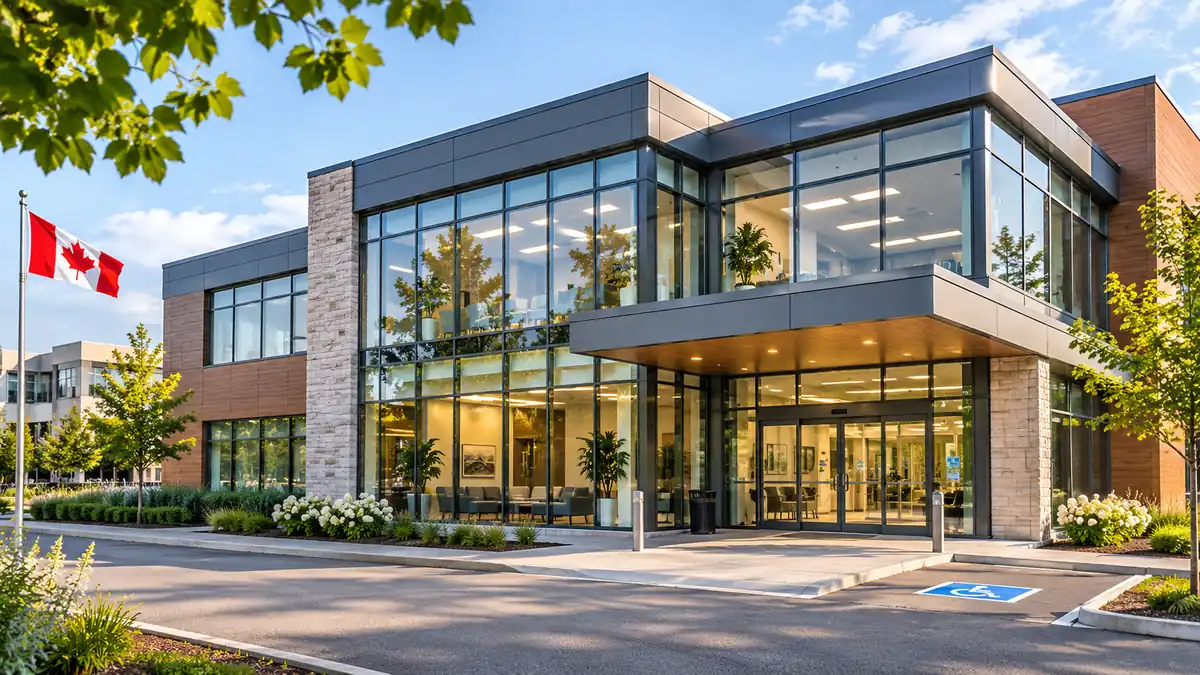
Purpose-built medical office buildings are designed around healthcare requirements. They may include accessible entrances, patient waiting areas, examination rooms, elevators, specialized ventilation and appropriate plumbing.
Diagnostic centres and imaging facilities can require more extensive infrastructure, making property suitability particularly important. Dental clinics, physiotherapy practices and specialist offices may have different space requirements and renovation budgets.
Another opportunity involves converting suitable retail or conventional office properties into medical spaces. Neighbourhood shopping centres can offer convenient parking, visibility and proximity to residential communities. However, zoning, building systems and accessibility must be checked before assuming that a vacant commercial unit can become a clinic.
Which Canadian Markets Deserve Attention?
Ontario offers an interesting starting point. MPAC data cited in Canadian industry reporting indicates that medical and dental properties represented more than 20% of new office buildings over a 16-year period, compared with a historical average of approximately 12%.
British Columbia also deserves attention, particularly communities experiencing population growth and investment in healthcare infrastructure. Purpose-built medical developments near hospitals and established residential areas may benefit from convenient patient access.
Other growing urban centres should be evaluated through local healthcare employment, population trends, competing medical space and tenant demand. Investors should not select a city based only on its population growth or healthcare spending.
How Can Medical Office Buildings Generate Returns?
Medical properties typically generate income through long-term commercial leases. Depending on the agreement, tenants may pay base rent plus some operating expenses, property taxes, maintenance or utilities.
Consider an illustrative building producing $500,000 in annual rental income. If operating expenses total $175,000, annual net operating income is $325,000.
At a purchase price of $5 million, the capitalization rate would be:
Cap rate = $325,000 ÷ $5,000,000 × 100 = 6.5%
This represents an unleveraged operating yield before financing costs, income tax and major capital expenditures. It is an example, not a Canadian market average or a promised return.
What Risks Should Investors Examine?
Medical tenants may remain in a location because moving a clinic involves patient communication, equipment relocation, regulatory considerations and expensive renovations. This can support longer occupancy, but it does not eliminate tenant default or vacancy risk.
Specialized buildings can also be difficult to lease to ordinary office tenants. A property designed for imaging equipment or clinical procedures may require substantial alterations before another business can occupy it.
Investors should examine lease expiry dates, tenant financial strength, renewal options, responsibility for repairs and the cost of restoring space after a tenant leaves. They should also review zoning permissions, building-code compliance, accessibility and environmental requirements.
TwikUp's Perspective
Medical office real estate deserves consideration as a specialized commercial property category, not simply as a safer version of conventional office investment. Its appeal comes from the relationship between healthcare services and physical locations, but that relationship creates technical and leasing responsibilities that investors cannot ignore.
A property with reliable healthcare tenants, adaptable clinical space and a convenient location may offer a stronger investment case than a newer building purchased at an aggressive valuation.
For readers exploring another healthcare-related property category, TwikUp's Canada Senior Housing Investment 2027 analysis examines how changing care needs can influence real estate opportunities.
Disclaimer
This article is for educational purposes only and does not constitute personalized investment, legal, tax or financial advice. Market indicators and illustrative calculations are not guaranteed investment outcomes. Investors should obtain professional property, zoning, construction, legal and financial assessments before acquiring or developing medical office buildings.