
Key Takeaways
- Airport warehouses benefit from specialised logistics requirements, including rapid freight transfers, customs access and temperature-controlled storage.
- Toronto, Vancouver, Hamilton and Edmonton offer different cargo infrastructure and development characteristics.
- Airport land ownership, leasehold conditions, tenant concentration and specialised construction costs can materially affect investment risk.
Could Air Cargo Real Estate Become a Property Investment Opportunity in Canada?
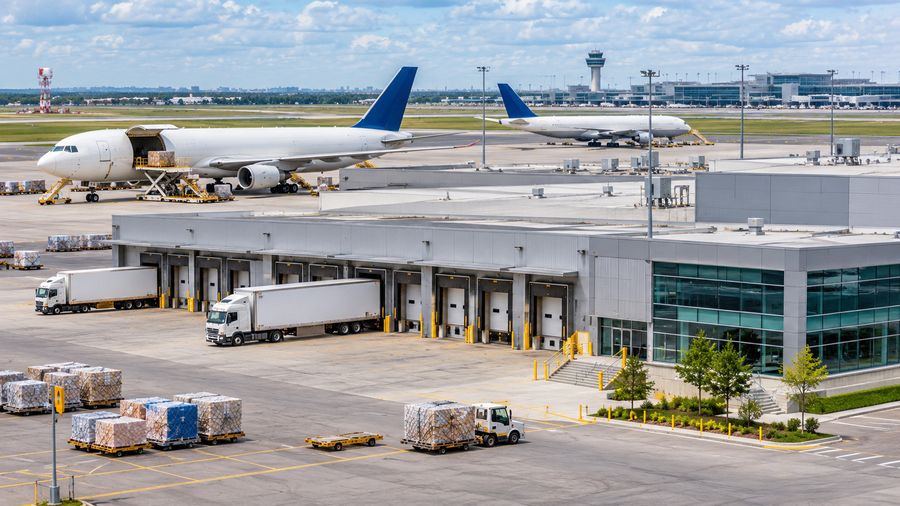
An airport warehouse is not simply another industrial building with a convenient location. It may connect directly to aircraft loading areas, operate alongside customs facilities or provide specialised storage for pharmaceuticals, fresh food and time-sensitive shipments. These features can make airport-linked properties attractive to logistics operators.
For investors, air cargo real estate in Canada represents a specialised segment of the industrial property market. Its potential depends on cargo activity, tenant requirements, airport infrastructure and the availability of suitable land. Growing freight volumes create an opportunity to investigate, but they do not automatically guarantee higher rents or investment returns.
Why Is Canada's Air Cargo Market Worth Watching?
Statistics Canada's July 2026 release reported that cargo loaded and unloaded at Canadian airports reached nearly 1.7 million tonnes in 2025, increasing 6.6% from the previous year. International cargo rose 12.6%, while domestic shipments increased 3.6%.
Transport Canada's 2025 annual report also recorded approximately 602,790 tonnes of non-U.S. international air cargo, compared with 546,797 tonnes in 2024. This reflects stronger overseas freight activity and changing trade patterns.
These figures matter because cargo operators need buildings that support receiving, sorting, temporary storage and onward transportation. However, investors should remember that cargo growth can be absorbed by existing facilities or handled through aircraft capacity improvements without creating equivalent demand for new warehouses.
Which Canadian Airports Offer Interesting Property Opportunities?
Toronto Pearson is the country's largest air cargo gateway. Its airport authority reports that Pearson handles more than 45% of Canadian air cargo and provides approximately 1.2 million square feet of on-airport warehouse space. Its highway connections and international network make the surrounding industrial area particularly relevant to freight businesses.
Vancouver International Airport offers another important opportunity to study. YVR reported record cargo volumes of 364,742 tonnes in 2025, a 7% increase from 2024. Its Cargo Village contains more than one million square feet of cargo buildings and warehouse space, supporting freight forwarders, customs brokers, carriers and trucking companies.
Hamilton International has a different advantage. It operates as a major overnight express cargo hub, with 24-hour operations and a dedicated 77,000-square-foot Cargo Centre. Edmonton International is also expanding its position. In October 2026, a new 50,000-square-foot airside cargo facility was announced, designed for time-sensitive shipments such as pharmaceuticals, perishables and e-commerce goods.
These locations are examples worth examining, not a ranking of investment returns.
What Makes Airport Warehouses Different From Ordinary Industrial Properties?
Airport logistics buildings often need specialised features that conventional warehouses may not require.
Airside facilities can provide direct access to aircraft parking areas. Other buildings operate beside restricted airport zones and connect to cargo terminals through controlled service roads. Off-airport warehouses may not have aircraft access, but they can still serve freight forwarders, customs brokers, courier companies and distribution operators.
Some properties also require refrigerated rooms, freezer capacity, secure storage, high-capacity electrical systems and specialised handling equipment. These improvements can attract tenants with specific operational needs, but they may also make a building expensive to adapt for another business if the original tenant leaves.
Can Private Investors Develop Property on Airport Land?
Yes, but ownership and development rights require careful examination. Transport Canada's March 2025 policy statement explains that most major National Airports System airports operate on federal land through long-term ground leases.
The policy identifies private-sector opportunities through commercial subleases, development projects and investment arrangements with airport authorities or their subsidiaries. This means an investor may participate in developing airport property without owning the underlying land outright.
Lease duration, permitted use, rent reviews, construction obligations, renewal rights and what happens to improvements when a lease ends can materially influence the investment. Airport land should never be evaluated as if it were an ordinary freehold industrial purchase.
What Risks Should Investors Examine?
Tenant concentration is a major concern. A building designed around one cargo operator may become difficult to lease if that company relocates or reduces operations.
Investors should also assess construction costs, refrigeration expenses, security requirements, insurance, maintenance and access arrangements. Airport zoning regulations can restrict building heights and certain activities on surrounding land, potentially limiting redevelopment options.
Finally, cargo demand is exposed to trade disruptions, airline capacity changes, fuel costs and shifts in shipping routes. A warehouse with excellent airport access can still struggle if its tenant base or transport connections weaken.
TwikUp's Perspective
Airport-linked warehouses deserve attention because they serve a specialised part of Canada's trade infrastructure. However, investors should distinguish between a busy airport and a profitable property. Cargo volumes alone cannot establish rental income, occupancy or a building's market value.
A stronger investment case begins with a specific site, confirmed development rights, realistic construction costs and credible tenant demand. Investors should also compare airport properties with other specialised logistics opportunities rather than assuming that proximity to a runway guarantees a premium.
Readers assessing infrastructure-related property opportunities can also explore our guides to Canada Development Land Investment 2027 and Canada Data Centre Real Estate 2027. At TwikUp, we believe the best opportunities are supported by practical tenant demand and workable property rights, not just an impressive infrastructure story.
Disclaimer
This article is for educational purposes only and does not constitute financial, legal, tax or investment advice. Airport-related property investments can involve specialised construction costs, leasehold restrictions, tenant concentration and regulatory requirements. Investors should obtain independent professional advice before committing capital.