
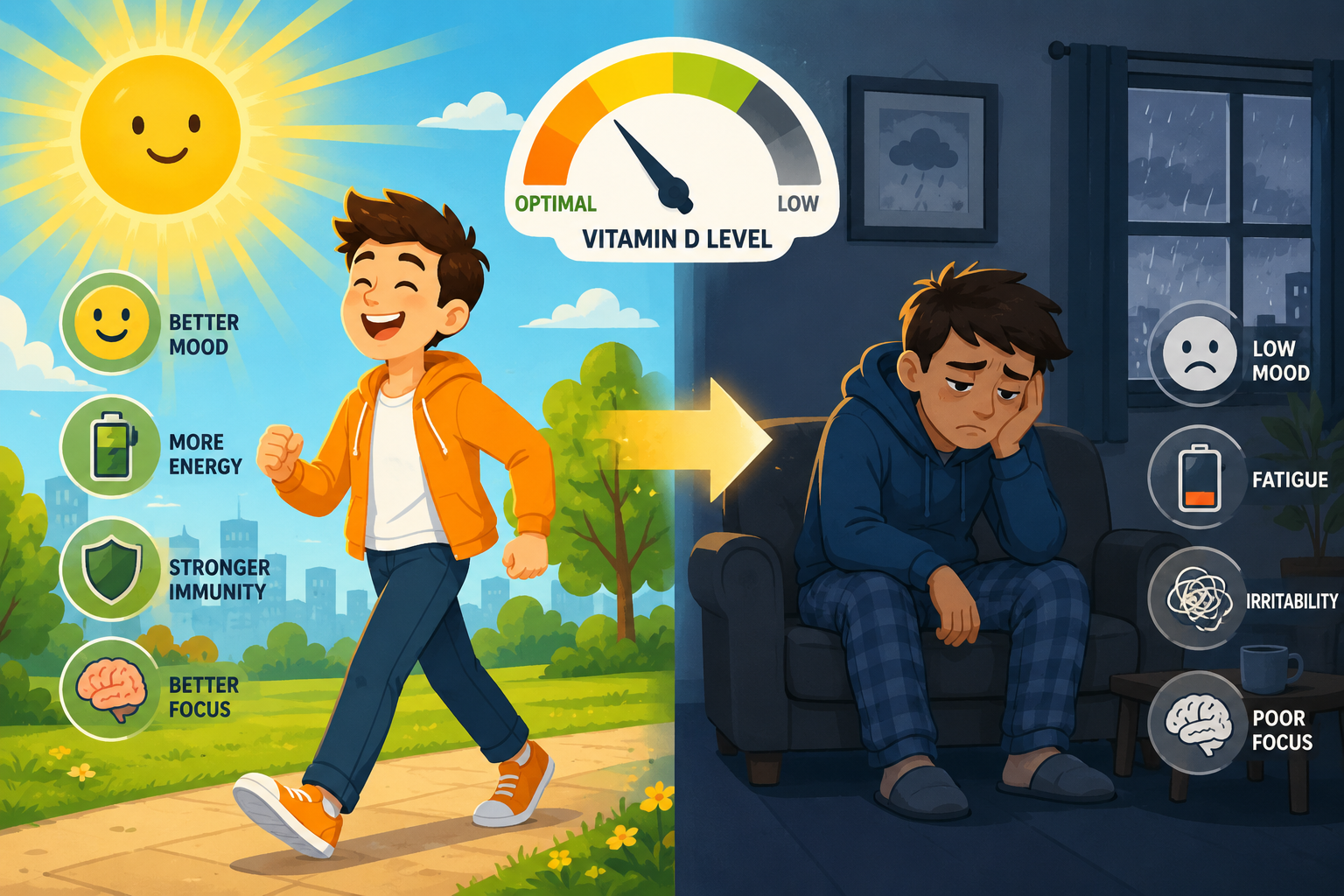
Vitamin D plays a quiet but important role in how the body regulates energy, immunity, and mood stability. When levels drop below optimal ranges, the effects are not always immediate or obvious, but they can influence how a person feels day to day.
Unlike nutrients that show clear physical symptoms when deficient, vitamin D often presents through subtle changes in mood and energy.
Why Vitamin D Matters for the Body and Brain
Vitamin D is produced when the skin is exposed to sunlight, and it also comes from limited dietary sources. Its role extends beyond bone health and into systems that affect brain function.
It is involved in regulating neurotransmitters and supporting processes linked to emotional balance and cognitive performance.
Low Levels and Mood Changes
When vitamin D levels are insufficient, people may experience:
- Persistent fatigue
- Low motivation or reduced drive
- Irritability or mood fluctuations
- Reduced focus or mental clarity
These effects are not exclusive to vitamin D deficiency, which makes the condition harder to identify without testing.
Why Deficiency Is Increasing
Modern lifestyles contribute significantly to lower vitamin D levels.
Key factors include:
- Reduced outdoor sunlight exposure
- Increased indoor work environments
- Limited dietary intake from natural sources
- Seasonal changes, especially in winter months
These patterns make deficiency more common even among otherwise healthy individuals.
Mood, Seasons, and Sunlight Connection
Many people report changes in mood during periods of low sunlight exposure. While multiple factors contribute to seasonal mood shifts, vitamin D is one biological component often associated with these changes.
This does not mean vitamin D is the sole cause, but it is one of several factors linked to how the body adapts to reduced sunlight.
When to Be Concerned
Vitamin D deficiency is not something that can be confirmed through symptoms alone. Blood testing is the only reliable method to determine levels accurately.
If fatigue or mood changes persist over time, especially alongside limited sun exposure, a deficiency may be one factor worth investigating alongside other health causes.