
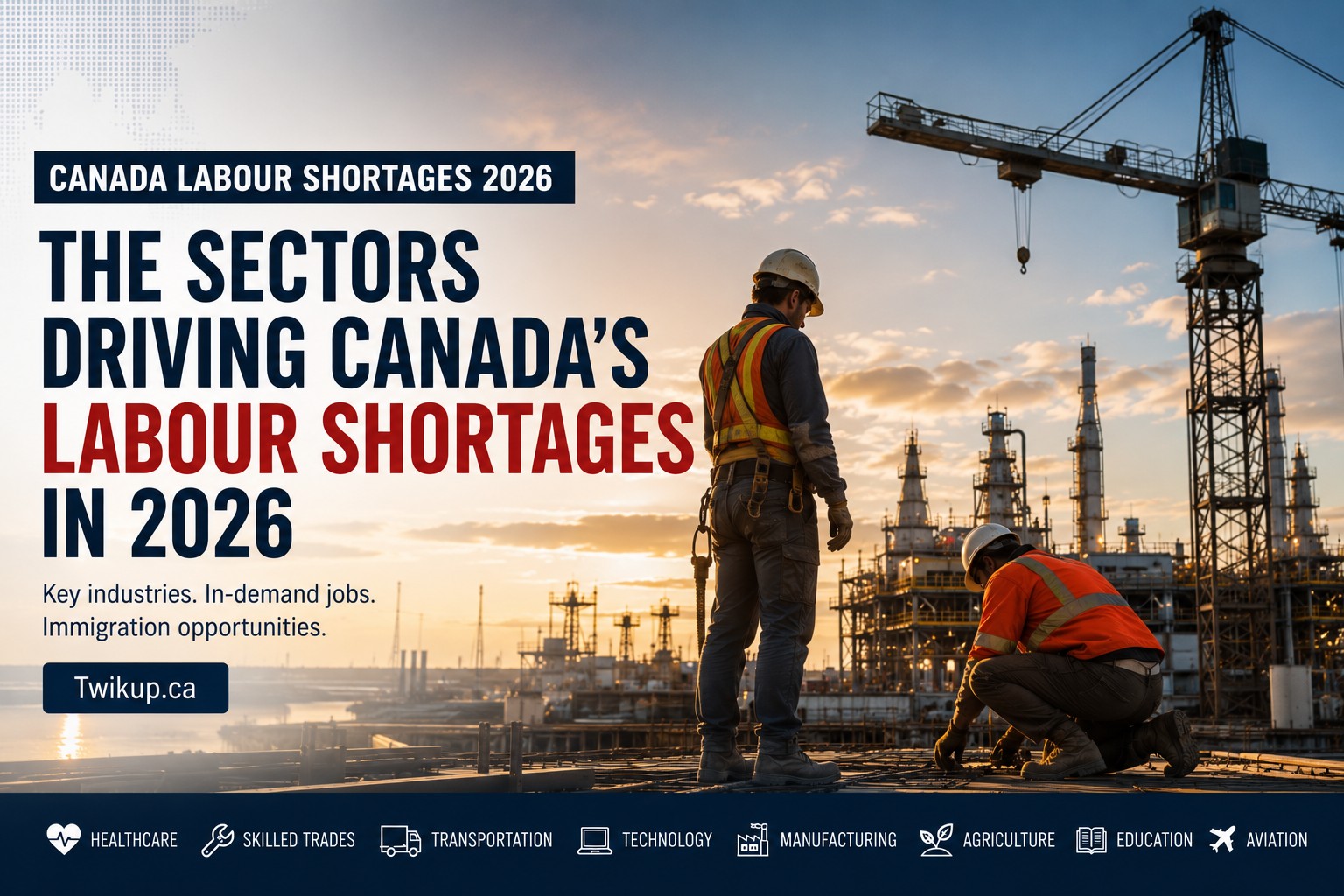
Many sectors of the Canadian economy continue to struggle with worker shortages in 2026.
Although labour market conditions vary by province and industry, persistent shortages are influencing immigration policies, wages, and long-term economic planning.
Understanding where demand exists can help workers, students, and newcomers make better decisions about employment and permanent residence.
Why Canada Continues to Face Labour Shortages
Several structural factors are contributing to shortages:
- Population aging.
- Retirement of experienced workers.
- Low birth rates.
- Population growth.
- Increasing demand for healthcare and infrastructure.
- Technological transformation.
- Regional demographic imbalances.
These pressures affect provinces differently, but the challenge is national in scope.
Which Sectors Face the Biggest Labour Shortages?
Healthcare
Healthcare remains one of Canada's most critical labour shortages.
Occupations experiencing demand include:
- Family physicians.
- Registered nurses.
- Licensed practical nurses.
- Nurse aides.
- Medical laboratory technologists.
- Pharmacists.
- Physiotherapists.
An aging population continues to increase pressure on healthcare systems.
Construction and Skilled Trades
Housing shortages and infrastructure projects have increased demand for:
- Electricians.
- Plumbers.
- Welders.
- Carpenters.
- Heavy equipment operators.
- Construction managers.
Several provinces continue to prioritize skilled trades through immigration pathways.
Transportation and Trucking
Supply chains rely heavily on truck drivers and logistics workers.
Demand remains strong for:
- Transport truck drivers.
- Delivery drivers.
- Dispatchers.
- Heavy-duty mechanics.
An aging workforce and retirements continue to affect the industry.
Related:
- Ontario PR for Truck Drivers: Eligibility and Pathways in 2026.
Technology
Demand remains strong for:
- Software engineers.
- Computer programmers.
- Cybersecurity specialists.
- Data analysts.
- Cloud specialists.
Technology shortages vary by region but continue to support immigration programs.
Related:
- Ontario PR for Software Engineers: Eligibility and Pathways in 2026.
Manufacturing
Manufacturers continue to seek:
- Industrial electricians.
- Machinists.
- Production supervisors.
- Mechanical technicians.
Agriculture
Agricultural labour shortages affect many regions.
Demand remains strong for:
- Farm supervisors.
- Agricultural technicians.
- Greenhouse workers.
- Equipment operators.
Education
Teacher shortages vary across provinces.
Demand exists for:
- Secondary school teachers.
- Special education teachers.
- French-language teachers.
Aviation
Alberta and other provinces continue to prioritize:
- Aircraft mechanics.
- Pilots.
- Aviation technicians.
Which Provinces Face the Greatest Shortages?
Ontario
Healthcare, skilled trades, transportation, and technology.
Alberta
Construction, healthcare, agriculture, aviation, and manufacturing.
British Columbia
Healthcare, construction, and technology.
Saskatchewan
Agriculture and skilled trades.
Atlantic Canada
Healthcare and transportation.
How Labour Shortages Influence Immigration
Labour shortages increasingly shape:
- Express Entry draws.
- Provincial Nominee Programs.
- Occupation-based pathways.
- Employer-sponsored programs.
- Temporary foreign worker policies.
Workers employed in high-demand occupations may enjoy stronger immigration opportunities.
Will Labour Shortages Disappear Soon?
Most experts expect shortages to remain a long-term challenge because of:
- Population aging.
- Retirement trends.
- Housing construction needs.
- Healthcare demand.
- Technological change.
Frequently Asked Questions
Which sector faces the biggest shortage?
Healthcare remains one of Canada's most severe labour shortages.
Are truck drivers still in demand?
Yes.
Transportation remains an important sector across Canada.
Is technology still experiencing shortages?
Yes.
Software engineers and related occupations continue to experience demand.
Do labour shortages affect immigration?
Yes.
Many immigration pathways prioritize occupations facing shortages.
Which provinces have the greatest demand?
Ontario, Alberta, British Columbia, and several Atlantic provinces continue to experience shortages.
Related Perspectives
Canada's labour shortages do not exist in isolation. They are closely connected to economic growth, immigration policy, trade, technology, and demographic changes. These developments are also shaping several broader trends across the country.
Labour Market and Economic Conditions
Recent employment data show that Canada's labour market remains resilient despite concerns about slowing economic growth. TwikUp recently examined how Canada Adds 87,800 Jobs as Unemployment Falls to 6.6%, highlighting the continued demand for workers in several sectors.
At the same time, questions about growth and productivity continue to influence hiring patterns. Readers interested in the broader economic context can explore What a Technical Recession Means for Canada as GDP Contracts for Two Straight Quarters and Canada's 'Technical Recession' Sparks Debate.
Manufacturing and Trade
Labour shortages in manufacturing are unfolding alongside uncertainty surrounding North American trade. TwikUp's analysis of CUSMA Renewal Risk: Sectors Facing the Biggest Exposure explains how industries dependent on cross-border trade may face additional challenges.
For a broader understanding of Canada's strategy, readers can also explore Inside Canada's Diplomatic Strategy for CUSMA Renewal and CUSMA Renewal Explained: Why Canada's 16-Year Push Matters.
Technology and Future Jobs
Canada's labour shortages are increasingly influenced by technological transformation. The country's efforts to strengthen artificial intelligence and innovation ecosystems could reshape demand for highly skilled workers over the coming decade. TwikUp recently explored this issue in Canada Bets $200B on AI for All National Strategy.
Climate-related challenges are also creating new opportunities in emerging industries. Readers can learn more in Canada's Wildfire Crisis Fuels Climate Tech Race.
Immigration and Occupation-Based Pathways
Labour shortages are one of the biggest forces shaping Canada's immigration system. Candidates seeking permanent residence can explore Canada PR in 2026: What CRS Score Is Really Needed?, which explains how CRS requirements and immigration priorities are evolving.
Several occupations experiencing shortages also benefit from targeted immigration pathways. TwikUp has published detailed guides covering: