
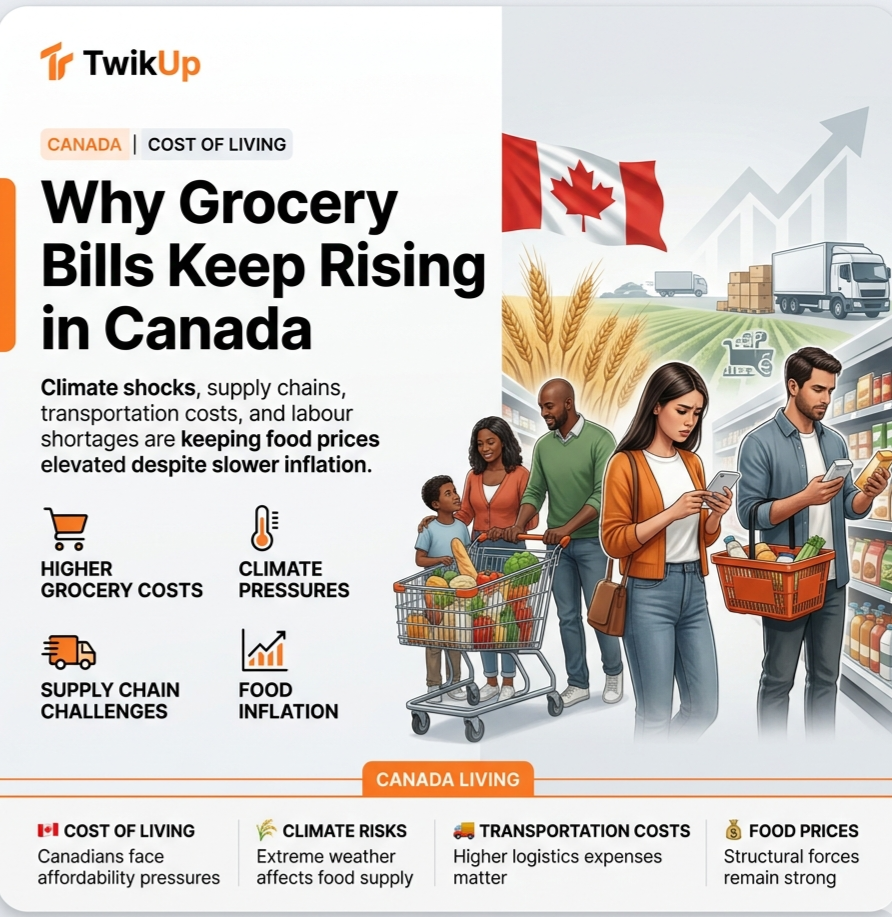
Many Canadians expected grocery prices to stabilize once inflation began cooling. Instead, food affordability remains one of the country's biggest economic concerns, creating a disconnect between official inflation figures and everyday experiences at the checkout counter.
While overall inflation has slowed compared with the post-pandemic surge, several structural forces continue to keep grocery bills elevated.
Food Prices Reflect More Than Inflation
Headline inflation only tells part of the story.
Food prices are influenced by multiple factors, including:
-
Transportation costs.
-
Labour shortages.
-
Climate-related disruptions.
-
Global commodity prices.
-
Supply chain adjustments.
-
Currency fluctuations.
These pressures often affect food prices differently from other categories in the economy.
Climate Change Is Increasing Pressure on Food Costs
Extreme weather events have become increasingly important drivers of food prices.
Wildfires, droughts, floods, and heat waves can damage crops and disrupt transportation networks, creating supply shortages and higher costs.
TwikUp recently examined how climate pressures are intensifying in Canada's Wildfire Risk Set to Climb This Summer, Canada's Summer 2026 Will Be Hotter Than Normal, and Canada's Wildfire Crisis Fuels Climate Tech Race.
These environmental pressures increasingly influence food production and distribution.
Global Supply Chains Have Become Less Efficient
The pandemic exposed vulnerabilities in global supply chains.
Although shortages have eased, businesses continue adapting to:
-
Higher shipping costs.
-
Geopolitical tensions.
-
Trade disruptions.
-
Inventory adjustments.
As a result, food producers and retailers face higher operating expenses than before the pandemic.
Labour Costs and Transportation Expenses Matter
Canada's vast geography makes transportation an important component of grocery prices.
Fuel costs, wages, warehousing, and logistics all contribute to the final price consumers pay.
These factors can continue affecting grocery bills even when broader inflation measures improve.
Affordability Remains a Major Concern
Rising food costs have become part of a wider affordability challenge.
TwikUp previously examined this issue in Canada Grocery Benefit 2026: Payment, Eligibility, Amount and What Salary Is Enough to Live Comfortably in Canada Today?.
Housing, utilities, and food expenses are increasingly competing for household budgets.
Economic Slowdowns Do Not Always Lower Food Prices
Some Canadians assume that weaker economic growth automatically leads to lower grocery bills.
However, supply-side pressures can continue pushing prices higher even during periods of slower economic activity.
TwikUp recently explored broader economic pressures in Canada's Technical Recession Sparks Debate and What a Technical Recession Means for Canada as GDP Contracts for Two Straight Quarters.
Why Food Affordability May Remain a Long-Term Issue
The challenge facing Canadians extends beyond temporary inflation.
Climate risks, demographic changes, labour shortages, and changing global trade patterns suggest that food affordability could remain a structural issue rather than a short-lived problem.
For consumers, this means the era of exceptionally cheap food may be giving way to a more expensive and unpredictable environment.
FAQ: Why Are Grocery Bills Rising?
Why are groceries still expensive if inflation is falling?
Food prices are affected by transportation, climate, labour, and supply chains, not just headline inflation.
Does climate change affect food prices?
Yes. Droughts, wildfires, and extreme weather can disrupt agricultural production and increase costs.
Will a recession reduce grocery prices?
Not necessarily. Supply-side pressures may keep prices elevated even during slower economic growth.
Why do Canadians feel inflation more strongly at grocery stores?
Food purchases are frequent and highly visible, making price increases easier to notice.
Is food affordability becoming a long-term problem?
Many economists believe structural factors could keep food prices under pressure for years.
Related Perspectives
Sources
-
Statistics Canada, Consumer Price Index https://www.statcan.gc.ca
-
Bank of Canada, Inflation and Monetary Policy https://www.bankofcanada.ca
-
Agriculture and Agri-Food Canada https://agriculture.canada.ca
-
OECD, Inflation and Food Prices https://www.oecd.org
-
World Bank, Commodity Markets Outlook https://www.worldbank.org