
Key Takeaways
- The Bank of Canada now publishes "what-if" scenarios so Canadians can see in advance how it would react if a risk hits.
- Its April high-oil scenario — inflation near 3% for over a year — tracked reality more closely than the Bank's own base case.
- Gravelle gave no hint about the Dec. 9 rate decision; the policy rate stands at 2.50%.
The Bank planned for $100 oil — and $100 oil is what it got
The Bank of Canada's April outlook assumed oil prices would fall back to about $75 a barrel by mid-2027, with inflation returning to 2% in early 2027. But the Bank also published a darker "what-if": a scenario in which war in the Middle East kept oil near $100 a barrel.
"In the April high oil price scenario, inflation stays close to 3% for more than a year, and consecutive policy rate increases are needed to get inflation back to target," Deputy Governor Toni Gravelle said in Edmonton on Wednesday.
By the Bank's October decision, oil was still near $100, refinery margins were above historical norms and new U.S. tariffs had added fresh uncertainty. "Oil prices and inflation, meanwhile, had tracked the higher-for-longer April scenario more closely than the base case," Gravelle said. "In other words, the upside risk to inflation we had identified in April had largely materialized."
Why the Bank shows its work
The speech, titled "Setting the scenario," explains why the Bank has started publishing these alternative paths instead of only its central forecast. Scenarios let the Bank explain in advance how it would react if a risk materializes, keep its guidance honest about uncertainty, and stress-test its own base case.
"We're living in a more shock-prone world," Gravelle said, pointing to a trade conflict that "has hit Canada particularly hard." Publishing every possible scenario would confuse more than it clarifies, he added, so the Bank shares only the ones that matter most.
"When certainty is in short supply, we don't have to be paralyzed," he said. "Rather, we need to be open about what we know and candid about what we don't."
Credibility is the payoff, he argued: "When the public trusts us to keep inflation around 2%, their inflation expectations stay anchored to that target, which, in turn, makes monetary policy more effective."
What he did not say
Gravelle offered no signal about the Bank's next rate decision on December 9, and the speech never mentions October's 3.1% inflation reading. The Bank's policy rate currently stands at 2.50%. "In this way," Gravelle said, "scenarios shift the focus from forecasting the future to preparing for it."
The Twikup Take
Rate decisions are easier to accept when the central bank has already shown you the map. The April scenario did not predict the future — but because the Bank published it, nobody had to guess why policy tightened when oil stayed high. That is the system working as Gravelle describes it.
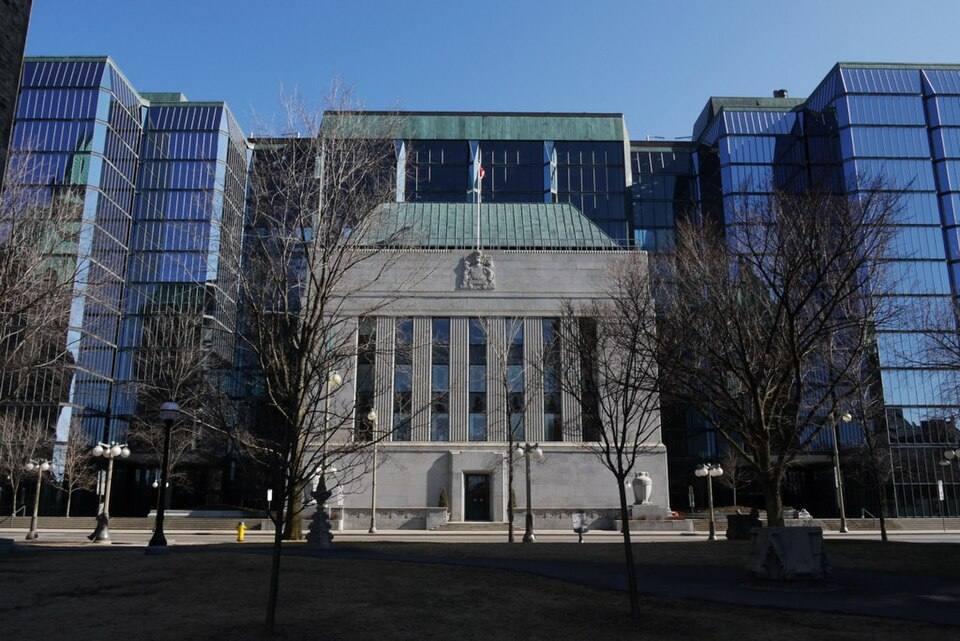
Image: Bank of Canada head office, Ottawa by d.neuman, via Wikimedia Commons, CC BY-SA 2.0.