
Key Takeaways
- Fraudsters posed first as the victim's bank, then as a VPD sergeant, and directed him to transfer over $60,000 to a U.S. account.
- Police will never ask for money or request a wire transfer — that is the tell, VPD says.
- Verify any such call independently on a publicly listed number; caller ID can be spoofed.
Two voices on the call — both fake
A Lower Mainland man lost more than $60,000 after scammers pretended to be his bank — and then the police.
It started with a call claiming to be from the man's bank. The caller warned of fraudulent activity on his account. Then a second voice joined the call, this time claiming to be a Vancouver Police sergeant investigating the matter.
The man was then told to transfer more than $60,000 to an account in the United States.
"Police will never ask for money"
"Scammers will often impersonate senior or other high-profile police officers to add legitimacy to their fraud," said Sergeant Adam Donaldson. "Even if you recognize the name of the police officer, or confirm the name is that of a serving officer, do not transfer money. Police will never ask for money, especially over the phone."
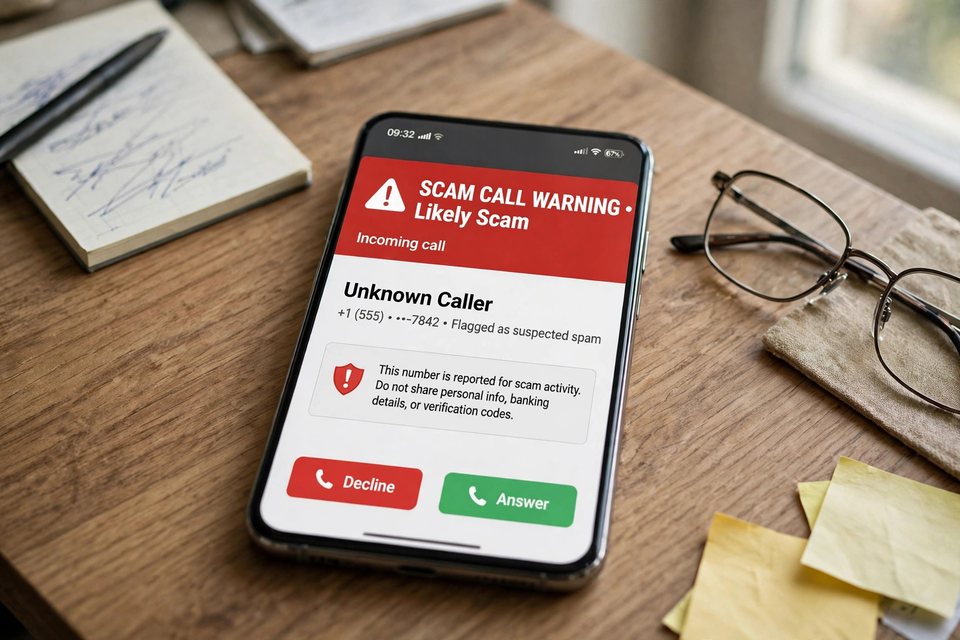
Vancouver Police say the best defence is simple: hang up and verify independently using a publicly listed phone number. Do not trust caller ID, because numbers can be spoofed.
Never share banking information, passwords or verification codes. Be wary of urgent demands to send money or act immediately.
Report suspected fraud to your bank, local police and the Canadian Anti-Fraud Centre.
The Twikup Take
Two voices. One scam. The "bank" created the panic, and the "sergeant" supplied the authority. Together, they made the fraud feel real.
The defence is boring — and total. Hang up, find the real number yourself, and call it. No legitimate institution will ever object to that.
Image: Illustrative image.