
Key Takeaways
- Canada and China extended and expanded their joint trade arrangement, adding about $400 million in tariff relief for Canadian pork and seafood exports.
- China is removing its 25% anti-discrimination tariffs on most frozen pork cuts,halibut,shrimp,molluscs & sea cucumber&relief on canola meal,peas,lobster &crab now run 2years longer
- Air Canada will fly Vancouver to Guangzhou starting May 2027, and a new Canadian trade mission to China is planned for 2027.
Pork, Shrimp and $400 Million More in Relief
Canada's China trade reset just got bigger — and seafood is among the winners.
Canadian pork, shrimp and seafood exporters are getting another opening into China. And this time, the trade relief is worth about $400 million.
Prime Minister Mark Carney met Chinese President Xi Jinping in Shenzhen on Tuesday, extending and expanding the countries' joint trade arrangement.
The new relief covers $116 million in frozen pork cuts and $285 million in fish and seafood.
China is removing its 25% anti-discrimination tariffs on most frozen pork cuts, Greenland halibut, frozen cold-water shrimp and prawns including Pacific spot prawns, molluscs including geoduck, and sea cucumber.
But the deal goes beyond new tariff relief.
Relief already in place for canola meal, peas, lobster and crab will now run two years longer, to the end of 2028.
In exchange, Canada is extending its remission measures for certain Chinese steel and aluminium products to the end of 2028, while adding 32 more tariff items where Canadian supply falls short.
From Tariff Battles to Billions in Reopened Trade
This isn't an isolated agreement. The Shenzhen meeting builds on the strategic partnership Carney and Xi launched in January.
Since then, Canada has restored market access for more than 90% of the trade that had been hit by tariff action — nearly $7.5 billion worth of Canadian exports.
And the relationship is expanding beyond what's being shipped across borders.
Air Canada will launch Vancouver-to-Guangzhou flights in May 2027. A new Canadian trade mission to China is planned for 2027, and the two countries declared a Canada-China Year of e-Commerce in 2027 to help smaller Canadian firms sell on Chinese platforms.
Carney described the shift as a benefit to both countries.
"Canada and China have recalibrated our relationship to the benefit of citizens in both countries," Carney said. "We have unlocked billions in new export orders for Canadian farmers, ranchers, and fish harvesters."
The economic stakes are considerable. Two-way merchandise trade hit $125.6 billion in 2025, and Ottawa's stated goal is to grow exports to China by 50% by 2030.
TwikUp has been tracking each step of the tariff rollback, including the extension of relief for canola meal, peas, lobster and crab through 2028.
The Twikup Take
A few months ago, this relationship was defined by tariff battles. Now, both countries are extending market access, reopening trade and planning new business opportunities.
Farmers and fish harvesters get the immediate benefits. But the steel and aluminium remissions show Ottawa is trading access both ways, not simply asking China for concessions.
The real test now isn't how much trade the two countries announce — it's how much Canadian business actually comes through the door.
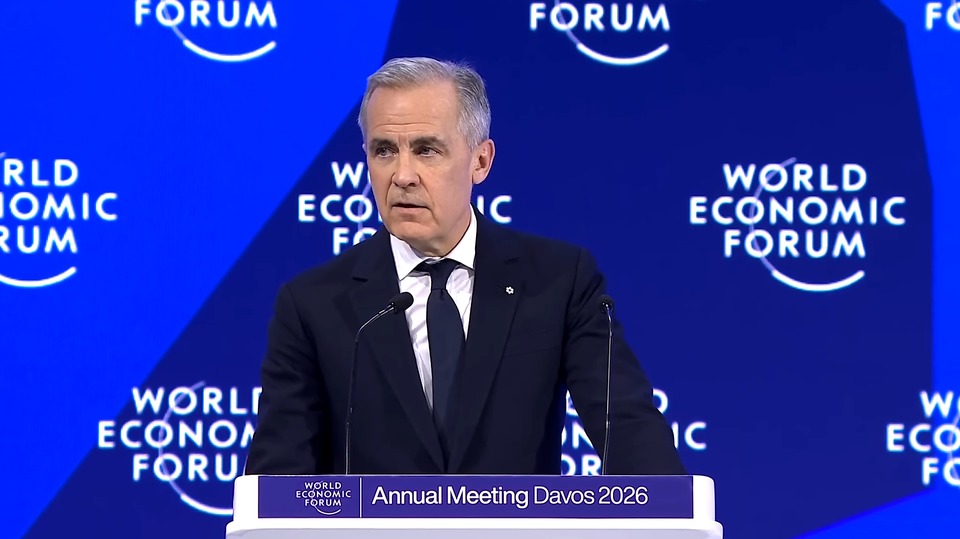
Image: Prime Minister Mark Carney addressing the World Economic Forum Annual Meeting 2026. Photo by World Economic Forum, CC BY 4.0.