
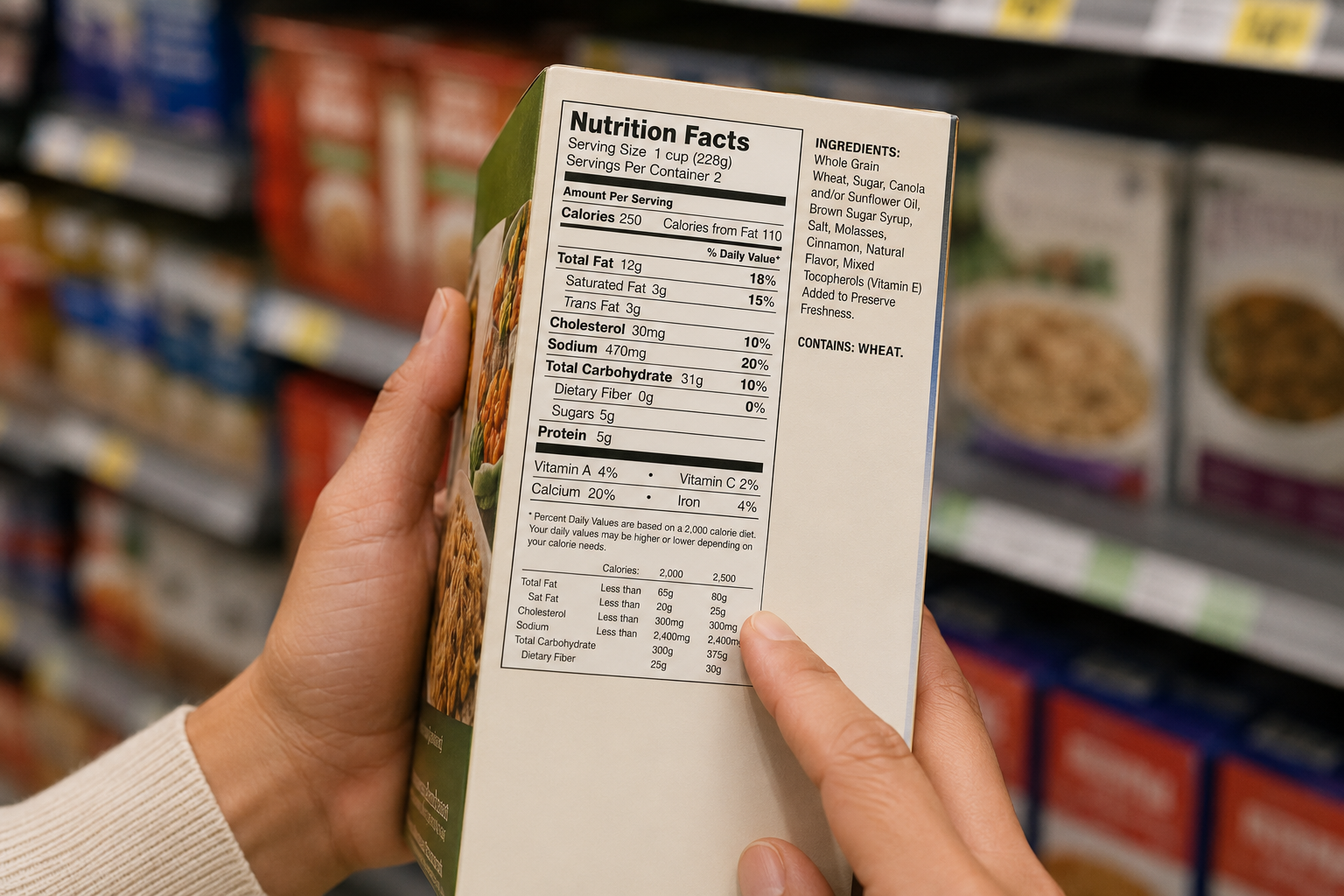
Nutrition labels are designed to help consumers understand what is inside the foods they buy.
However, many people focus only on calories and overlook other important information. Learning how to read a label properly can make it easier to compare products and build healthier eating habits.
Start With the Serving Size
The serving size is one of the most important parts of the nutrition label.
All the information listed, including calories and nutrients, is based on that amount. If you eat more than one serving, the numbers increase accordingly.
Checking the serving size first can help prevent misunderstandings about how much is actually being consumed.
Look at Calories in Context
Calories provide energy, but the number alone does not determine whether a food is healthy.
A product may be low in calories but high in added sugars or sodium. Looking beyond calories gives a more complete picture of nutritional value.
Comparing similar products can help consumers make more balanced choices.
Pay Attention to Key Nutrients
Nutrition labels highlight several nutrients that people may want to monitor.
These include:
- Saturated fat
- Sodium
- Added sugars
- Dietary fibre
- Protein
- Calcium
- Iron
- Potassium
Foods higher in fibre and essential nutrients and lower in excessive sodium and added sugars are often considered healthier options.
Check the Ingredient List
Ingredients are listed in descending order by weight.
This means the first ingredients make up the largest portion of the product.
Reading the ingredient list can help identify added sugars, refined ingredients, and highly processed components that may not be obvious from the front of the package.
Use Percent Daily Value as a Guide
Percent Daily Value shows how much a nutrient in one serving contributes to an average daily diet.
As a general guide:
- Five percent or less is considered low.
- Twenty percent or more is considered high.
These percentages can help consumers compare products and determine whether a food contains relatively high or low amounts of specific nutrients.
Why Nutrition Labels Matter
Food labels are not meant to eliminate certain foods or create strict rules.
Instead, they provide information that allows people to make choices that fit their dietary needs and preferences.
Understanding how to interpret labels can help build healthier habits over time and make grocery shopping less confusing.
Related Perspectives
Understanding added sugars
How to build a balanced diet
Common nutrition myths