
Key Takeaways
- Bill 148's Schedule 10 would create Ontario's first Intimate Images Protection Act, covering AI-altered images.
- Victims could sue makers, distributors — and people who merely threaten to share — without proving damage.
- Courts could order images destroyed, removed and de-indexed, and could issue fast-track orders even before an image is shared.
A new civil weapon against image abuse — including deepfakes
Ontario lawmakers debated Bill 148 at second reading for a second straight day on Wednesday. Tucked inside the 18-schedule omnibus — the Protect Ontario Families and Communities Act, 2026 — is Schedule 10, which would create a new Intimate Images Protection Act, the province's first civil law aimed squarely at non-consensual intimate images.
The definition reaches material made or altered by "software, machine learning, artificial intelligence or other electronic means" — meaning AI deepfakes are covered even though the word "deepfake" never appears in the bill. Consent, once given, could be revoked at any time.
Sue without proving damage — and the burden flips
If passed, a victim could sue anyone who made, distributed or even threatened to distribute an intimate image without consent. The lawsuit could proceed against an unidentified defendant known only by a username or account, no proof of damage would be required, and non-consent would be presumed unless the defendant proves otherwise.
Courts could order every copy destroyed, order the image removed from platforms and de-indexed from search engines, direct internet intermediaries themselves to remove and de-index it, and award compensatory, aggravated and punitive damages. A separate fast-track process would let a judge order distribution stopped — including where a victim merely fears an image will be shared — potentially without a hearing. Ignoring an order would be an offence. The new act would take effect on proclamation, not automatically when the bill passes.
"Our government will never stop working to ensure stronger systems and greater protections are in place for the people of Ontario," said Michael Parsa, the Minister of Children, Community and Social Services, who introduced the bill and moved its second reading. The wider package also tightens children's-aid oversight, adds human-trafficking training in child welfare, and changes rules across health care and long-term care.
The Twikup Take
Criminal charges for image abuse exist, but they are slow and hard to prove — and they do not get an image taken down. A civil route with de-indexing orders attacks the thing victims actually want gone: the image itself, and its searchability.
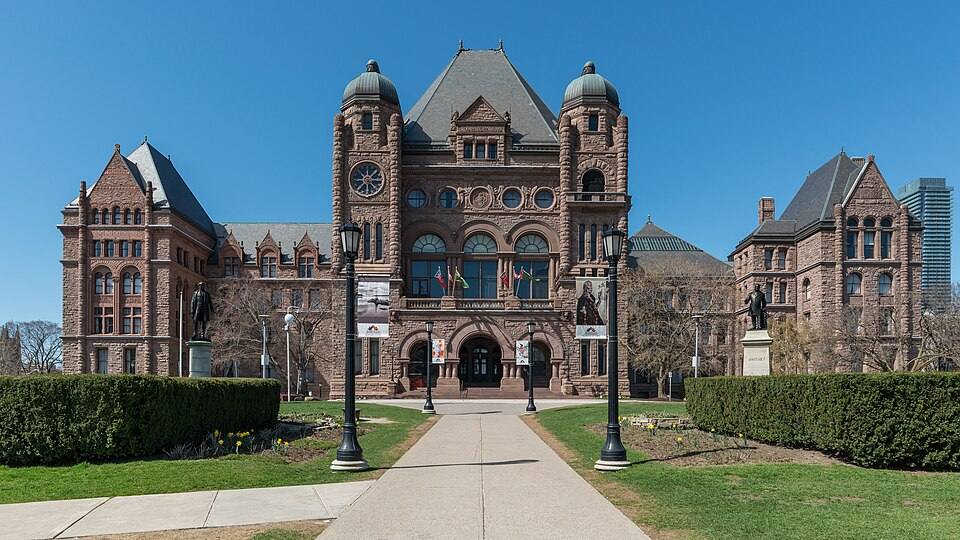
Image: Ontario Legislative Building (Queen's Park), Toronto by DXR, via Wikimedia Commons, CC BY-SA 4.0.